An action can be described at many levels. A person reaches for a cup, steadies it as it is filled, brings it to the mouth, and stops before spilling. At the level of the task, the action is organized around an outcome. At the level of the body, it involves changing joint torques, stabilizing the trunk, shaping the hand, and adjusting grip force. At the final neural and mechanical levels, every one of those changes must become a pattern of activity in motor neurons and muscle fibers.
This chapter follows that descent without treating it as a one-way command chain. The spinal cord is not a passive cable beneath a commanding brain. It contains controllers that predate the cerebral cortex and remain capable of organizing reflexes, rhythmic patterns, and coordinated responses. Brainstem systems regulate and recruit those older circuits. Cortical systems add flexible sensory guidance, learned rules, and unusually direct access to the distal musculature. Each level acts on other levels while receiving information from the body and the world.
The result is a genuine hierarchy, but not a homunculus. It is a hierarchy of controllers controlling controllers. The most recent systems did not replace the older ones. Evolution added ways to select them, tune their gain, redirect their output, combine them, and suppress them when their default response would be inappropriate. The clearest place to begin is the point through which all ordinary somatic motor control must finally pass.
Where action becomes force
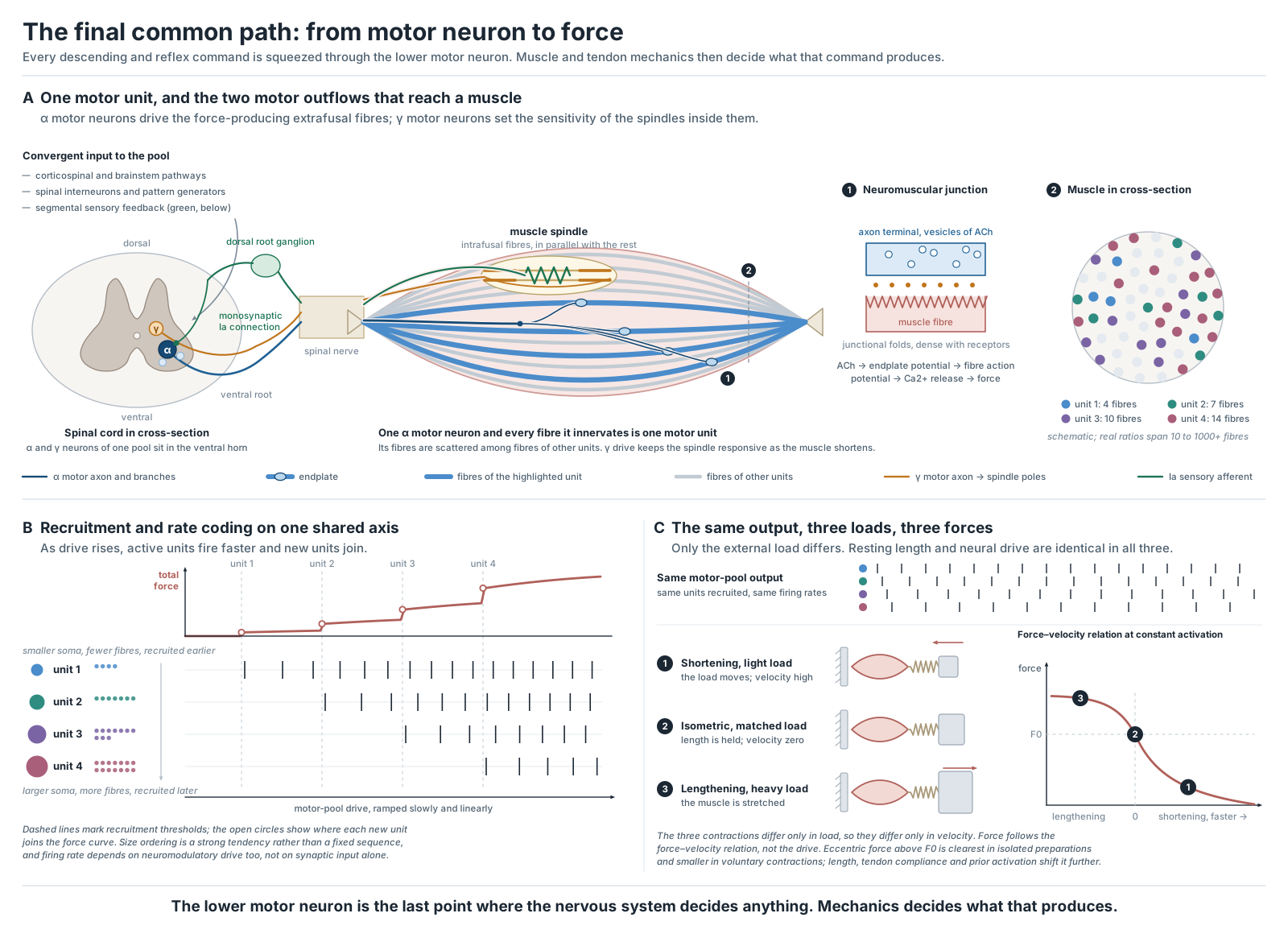
Skeletal muscle is driven by lower motor neurons in the ventral horn of the spinal cord and in the motor nuclei of the brainstem. For the trunk and limbs, an alpha motor neuron sends its axon through a ventral root and then a peripheral nerve. The axon branches within a muscle and forms neuromuscular junctions with a set of force-producing, or extrafusal, muscle fibers. An action potential arriving at the terminal releases acetylcholine; the muscle-fiber membrane is depolarized; calcium is released inside the fiber; and the contractile machinery produces force.
One alpha motor neuron together with all the extrafusal fibers it innervates forms a motor unit. All of the motor neurons supplying one muscle form a motor-neuron pool. The number of fibers in a unit varies greatly. A motor neuron serving a muscle that requires fine gradation may innervate relatively few fibers. A motor neuron serving a large force-producing muscle may innervate many more. Precision is not created solely in cortex. It is partly built into the peripheral geometry through which neural activity reaches muscle.
Charles Sherrington called the lower motor neuron the final common path [@sherrington1906integrative]. The phrase remains useful because it states a hard anatomical constraint. A spinal reflex, a locomotor pattern generator, a vestibular correction, a cortical reach, and a cerebellar adjustment can all converge on the same motor-neuron pool. If the relevant lower motor neurons or their axons are destroyed, those upstream systems lose their ordinary route to the muscle.
The final path is common, but it is not simple. Force is graded principally by two linked processes:
- Recruitment — bringing additional motor units into activity.
- Rate coding — changing how rapidly active motor neurons discharge.
Recruitment is generally orderly. Small motor neurons are more easily brought to threshold than large ones, and they tend to innervate smaller, slower, more fatigue-resistant motor units. As force requirements rise, progressively larger and more forceful units are recruited. Henneman described this organization as the size principle, and recordings from human motor units confirmed a strong relationship between recruitment threshold and unit force [@henneman1957size; @milnerbrown1973recruitment]. The arrangement provides fine resolution at low forces and reserves large, rapidly fatiguing units for greater demands.
The size principle is a dominant organizing tendency, not a promise that every unit always enters in one immutable order. Recruitment can be influenced by the pattern of synaptic input, the muscle and task, fatigue, and the mechanical conditions under which force is produced. Even when recruitment order is stable, the force contributed by an active unit depends on its firing rate and on the contractile state of the muscle.
This is why recruitment and rate coding are not the whole vocabulary of action. The same motor-neuron discharge can have different mechanical consequences depending on muscle length, shortening velocity, recent activation, tendon compliance, joint angle, co-contraction, external load, and the activity of other muscles. Neural activity creates force through a body whose mechanics continually change. The final common path is therefore the neural bottleneck, not a complete description of the output.
Gamma motor neurons provide an important qualification to the word motor. They innervate the contractile poles of intrafusal fibers inside muscle spindles rather than the extrafusal fibers that generate most external force. Their action changes the sensitivity of a sensory organ. The spinal cord thus sends motor output both to the machinery that moves the body and to the machinery that measures that movement.
Motor pools are arranged within the cord
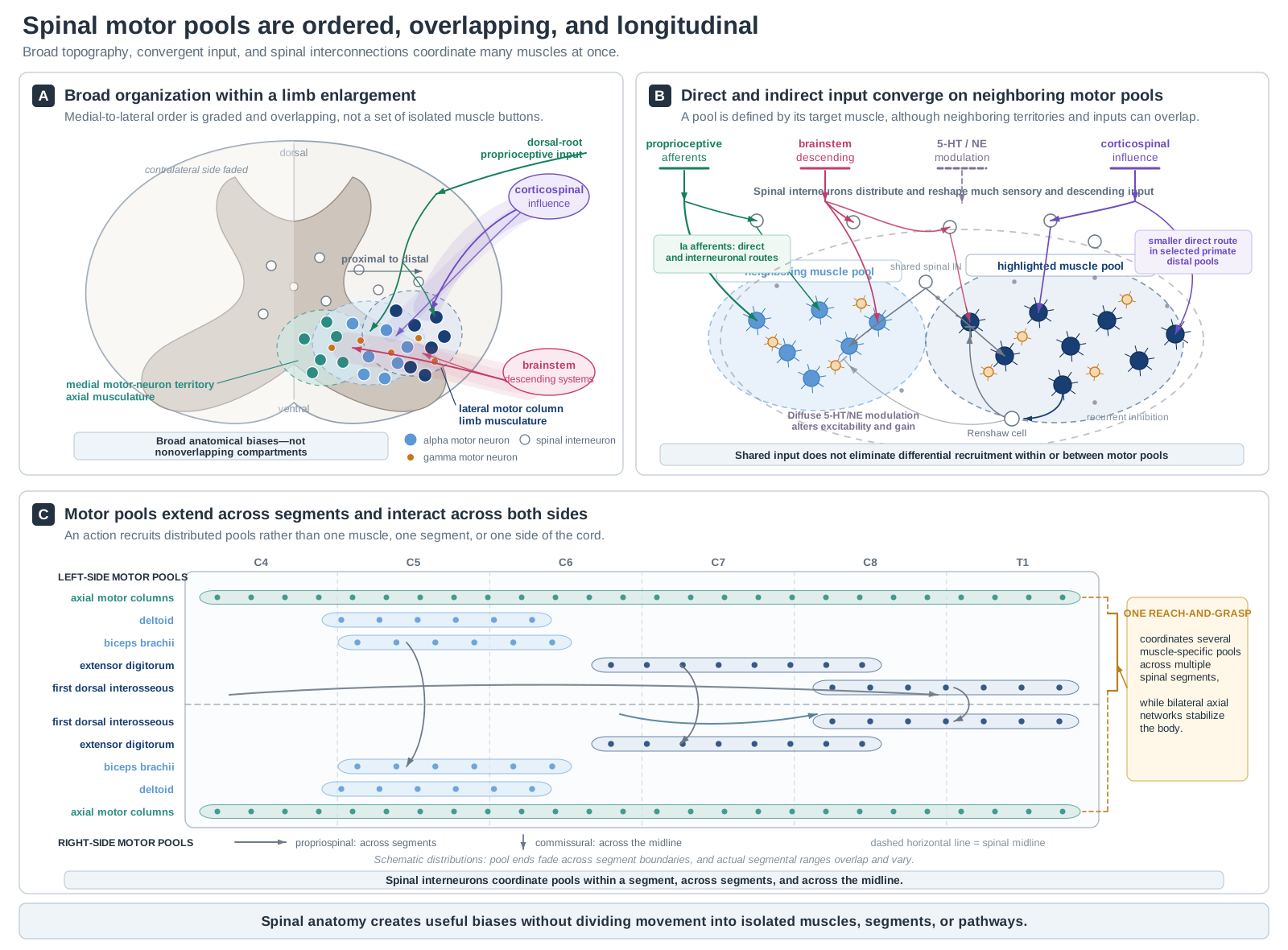
Motor neurons are not scattered randomly through the ventral horn. They are organized into longitudinal motor columns and more local motor pools that reflect the muscles and body regions they serve. Motor neurons supplying axial musculature occupy relatively medial territories through much of the cord. Neurons serving the limbs appear in lateral motor columns within the cervical and lumbosacral enlargements. Within those limb-related territories, pools for more proximal muscles tend to lie more medially than pools for more distal muscles.
This is a broad anatomical order, not a miniature body drawn with sharp boundaries. A motor pool can extend across several spinal segments. Alpha and gamma motor neurons serving the same muscle are intermingled, and interneurons connect pools within a segment, across segments, and across the midline. A muscle also rarely acts alone. Reaching, standing, breathing, and walking require coordinated changes across many pools, often distributed over a substantial length of the cord.
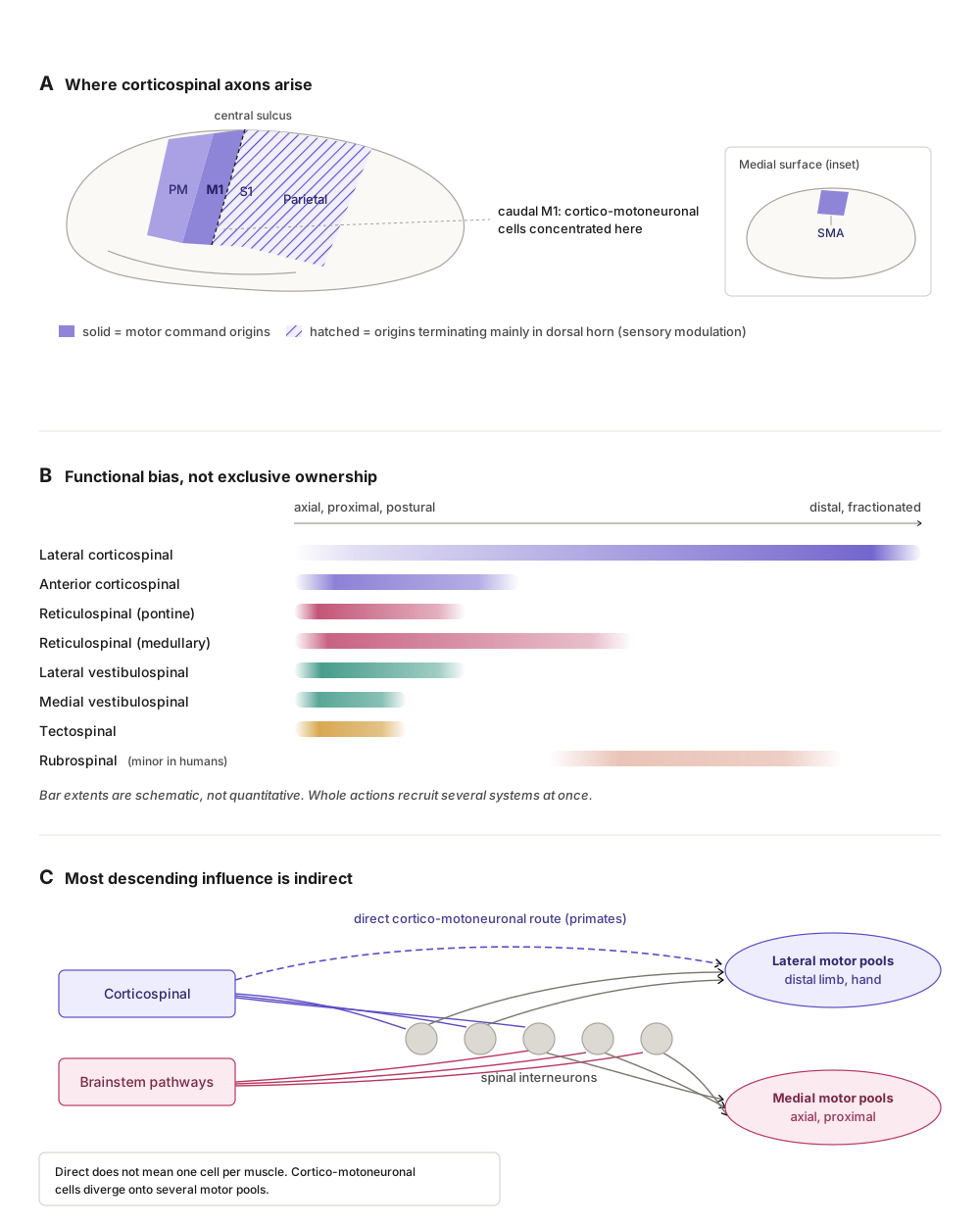
The organization nevertheless gives descending systems useful leverage. Brainstem pathways with broad bilateral projections can efficiently influence medial and proximal networks involved in posture and whole-body coordination. Corticospinal projections can reach lateral limb circuitry and, in primates, obtain unusually direct access to selected distal motor pools. These are graded biases rather than separate motor systems. A postural adjustment can include the hand, and a skilled hand action still requires the shoulder, trunk, and legs.
A motor pool should therefore be imagined as a population whose members share some synaptic drive while remaining differentially recruitable. Sensory afferents, local interneurons, neuromodulators, and descending pathways converge on the pool. The output is an orderly but adaptable distribution of activity across motor units, not a command delivered to one passive relay.
The final pathway is already a controller
A lower motor neuron does not merely relay whatever arrives from above. Its dendritic tree receives converging input from sensory afferents, spinal interneurons, neighboring motor circuits, and brainstem pathways. Corticospinal influence reaches many pools through interneurons and, in selected primate motor pools, also through direct cortico-motoneuronal connections. Inhibition and excitation arrive at different locations and times. Neuromodulators alter membrane conductances. The same descending volley can therefore produce different output when the motor neuron is resting, already active, strongly inhibited, or close to threshold.
Motor neurons also possess intrinsic currents that can amplify and prolong synaptic effects. Persistent inward currents in their dendrites can transform a brief or modest input into sustained firing. Brainstem serotonin and noradrenaline normally regulate these currents and also influence sensory transmission within the cord. The motor neuron is therefore a state-dependent integrator: its output depends not only on the immediate command but also on the excitability of the cell and the circuit in which it sits [@hultborn2003persistent].
This property is useful. Sustained posture and grip would be inefficient if every spike had to be specified independently from cortex. Intrinsic amplification allows descending and sensory inputs to recruit stable force while higher levels attend to other aspects of the task. But the same mechanism can become pathological. After a spinal injury, loss and later reorganization of descending monoaminergic control can contribute to self-sustaining discharges and spasms. A mechanism that normally helps maintain force can become difficult to terminate when it is separated from the systems that regulate it [@murray2010serotonin; @damico2013spasms].
A recurrent spinal circuit adds another form of regulation. When an alpha motor neuron fires, one of its axon collaterals can excite a Renshaw cell, which returns glycinergic inhibition to motor neurons in the same and neighboring pools. This is recurrent inhibition, but its function should not be reduced to a simple brake that prevents every contraction from becoming explosive. Depending on the pool and behavioral state, it can shape gain, redistribute activity, reduce unwanted synchronization, and filter oscillatory input. Modeling and physiological evidence suggest that recurrent inhibition can help suppress components of physiological tremor, but it operates alongside many other inhibitory circuits [@williamsbaker2009renshaw].
Tetanus illustrates the danger of losing inhibition but should not be interpreted as a selective Renshaw-cell disease. Tetanus toxin disrupts inhibitory transmitter release across spinal and brainstem circuits. The resulting rigidity and spasms reveal the importance of inhibition throughout the motor hierarchy, not the isolated function of one named interneuron.
The spinal cord closes fast loops
The spinal cord can control only what it can measure. Proprioceptive and cutaneous afferents provide several complementary measurements of the body.
Muscle spindles lie in parallel with the extrafusal fibers and are sensitive to muscle length and the rate at which length changes. Their primary and secondary afferents enter the spinal cord through the dorsal roots. Golgi tendon organs lie in series with muscle fibers and report tension transmitted through the tendon. Cutaneous receptors report contact, pressure, slip, and deformation at the skin. Joint-related and nociceptive afferents add other information. Each incoming axon can branch, sending one stream toward ascending pathways while other branches influence spinal interneurons and motor-neuron pools.
This branching is one reason sensation and action cannot be separated cleanly. A proprioceptive signal can alter motor output before it contributes to a conscious estimate of limb position. The ascending copy is not the signal’s only destination, and conscious awareness is not a prerequisite for control.
A stretch response is a sequence, not one reflex
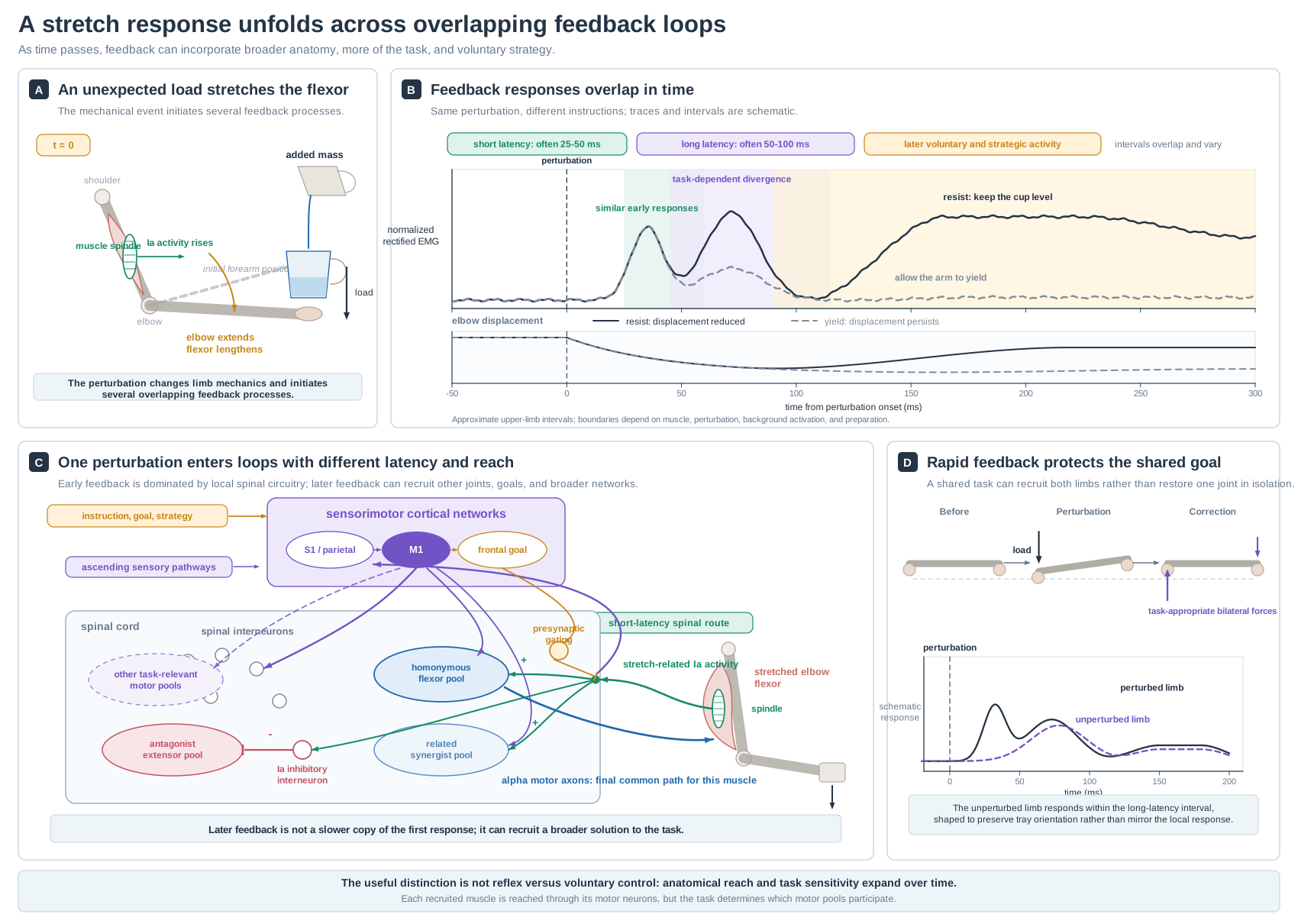
The tendon tap provides the simplest entry point. A sudden stretch of a muscle activates spindle afferents. Group Ia afferents make powerful excitatory connections with alpha motor neurons supplying the same muscle and related synergists. Through inhibitory interneurons, they can also reduce activity in an antagonist. The shortest route contains only one central excitatory synapse and is therefore called monosynaptic, although the full response always occurs within a larger network.
Ordinary stabilization is more complicated. Suppose a person is holding a cup and liquid is poured into it. The load begins to alter the arm. A short-latency spinal response can start opposing the stretch quickly, but it is followed by later responses that involve additional spinal, brainstem, and cortical processing. In upper-limb muscles, a long-latency response beginning roughly tens of milliseconds later can pass through primary motor cortex and incorporate information about more than one joint. Still later corrections can be shaped by explicit instruction and voluntary strategy [@palmerashby1992longlatency; @pruszynski2011feedback].
The relevant distinction is therefore not reflex or brain. The nervous system mounts a temporally overlapping sequence:
- an early response dominated by local spinal circuitry;
- a later, task-sensitive response that can recruit transcortical and other long-loop pathways;
- voluntary and strategic corrections that continue the same control process.
The boundaries are not identical for every muscle or perturbation. Long-latency responses of the hand and arm have especially strong evidence for transcortical participation; responses in axial, jaw, and lower-limb systems can use different mixtures of pathways. What matters conceptually is that feedback control is distributed across latency and anatomy.
Rapid feedback is also selective. In a bimanual task analogous to balancing a tray, perturbing one hand can evoke a fast response in the other hand that helps preserve the shared task rather than simply returning each limb to its previous position [@dimitriou2012bimanual]. The controller corrects what threatens the goal. It need not erase every deviation in every joint.
Antagonists can be inhibited—or recruited together
The textbook stretch-reflex diagram usually adds reciprocal inhibition. Ia afferent input from a stretched flexor can excite the flexor motor pool and, through an inhibitory interneuron, suppress the antagonist extensor. This arrangement helps one muscle act without unnecessary opposition from its antagonist.
But antagonists do not always need to relax. Co-contraction can increase joint stiffness, stabilize an uncertain load, protect a joint, or improve accuracy when a flexible response would be dangerous. Descending pathways and spinal interneurons can reconfigure the balance between reciprocal inhibition and co-activation. The circuit is not a fixed rule saying that excitation of one muscle must always silence its opponent. It is a controllable relation whose sign and gain depend on the task.
The nervous system also regulates sensory input before it reaches motor neurons. Presynaptic inhibition at afferent terminals can reduce transmitter release from selected sensory fibers. This provides a way to change reflex gain without changing the receptor or silencing the entire spinal cord. A sensory signal that is useful during quiet stance may be disruptive during a different phase of walking. The spinal network therefore controls not only its motor output but also how strongly particular inputs are allowed to influence that output.
Withdrawal is organized around the body
The flexor-withdrawal and crossed-extension patterns make the same point at a larger scale. A noxious stimulus to one foot can recruit flexion on the stimulated side while promoting extension in the other limb. The spinal basis of this coordination is well established in animal preparations, and related patterns can be observed in humans. Yet an intact adult does not execute a rigid, context-free reflex every time the skin is stimulated. The response depends on posture, phase of locomotion, support, stimulus location, and descending state.
If the stimulated leg is bearing the body’s weight, immediate flexion may be delayed or reorganized until another support is available. During walking, cutaneous input can facilitate one muscle in one phase and a different muscle—or the opposite response—in another. The spinal cord contains patterned coordination, but descending systems and sensory context continually configure which pattern is useful.
This is the deeper sense in which the cord is a controller. It does not merely convert one input into one stereotyped output. It combines current sensory evidence, internal state, phase, and descending bias to produce a response suited to a body already in motion.
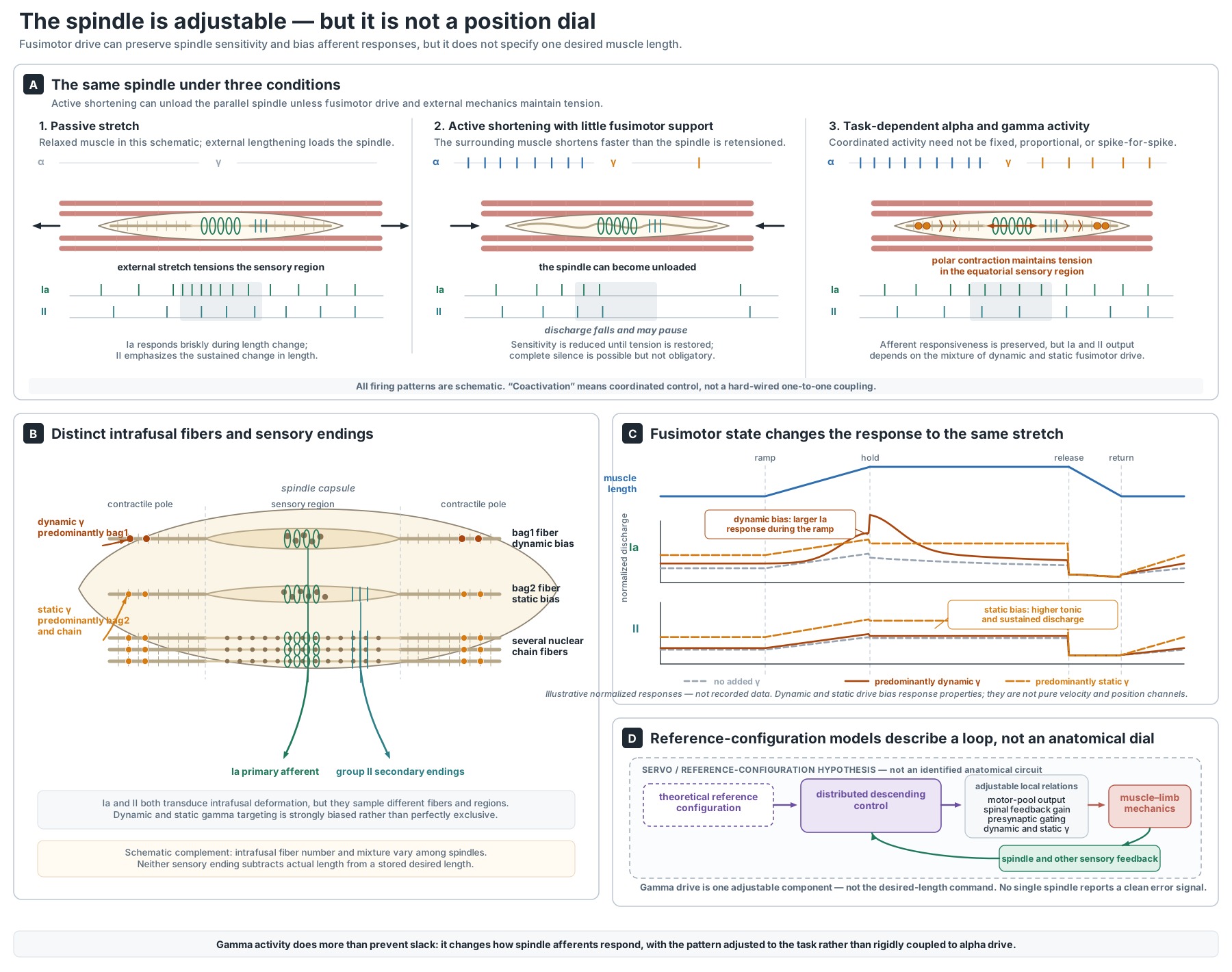
A muscle spindle would lose sensitivity if it simply became slack whenever the surrounding muscle shortened. Gamma motor neurons reduce this problem by contracting the polar regions of the intrafusal fibers. Alpha and gamma activity often rise together during movement, preserving spindle responsiveness while extrafusal fibers shorten. Dynamic and static gamma drive can also bias the spindle toward different aspects of movement, such as velocity-related or more sustained length-related information.
The phrase alpha–gamma coactivation is useful, but it should not suggest one fixed coupling. Recordings from spindle afferents show that fusimotor drive can be modest in some movements and adjusted according to task demands in others [@prochazka1979spindle; @ribotciscar2009fusimotor]. The nervous system does not merely keep the receptor taut; it can change what information the receptor emphasizes.
This arrangement inspired servo and equilibrium-point theories of motor control. In their strongest form, such theories propose that higher centers specify a reference configuration and that spinal mechanics and reflexes help move the limb toward it. The idea captures something important: descending systems can alter local feedback relations instead of calculating every force directly.
But gamma drive is not a simple dial labeled “desired muscle length.” Spindle discharge depends on actual length, velocity, recent history, intrafusal mechanics, alpha drive, gamma drive, and load. Nor does one spindle compare actual length with an explicit neural set point and report a clean error signal. Reference-state accounts remain valuable hypotheses about how descending and spinal control interact, not a literal description established by the anatomy alone.
Evolution adds control above control
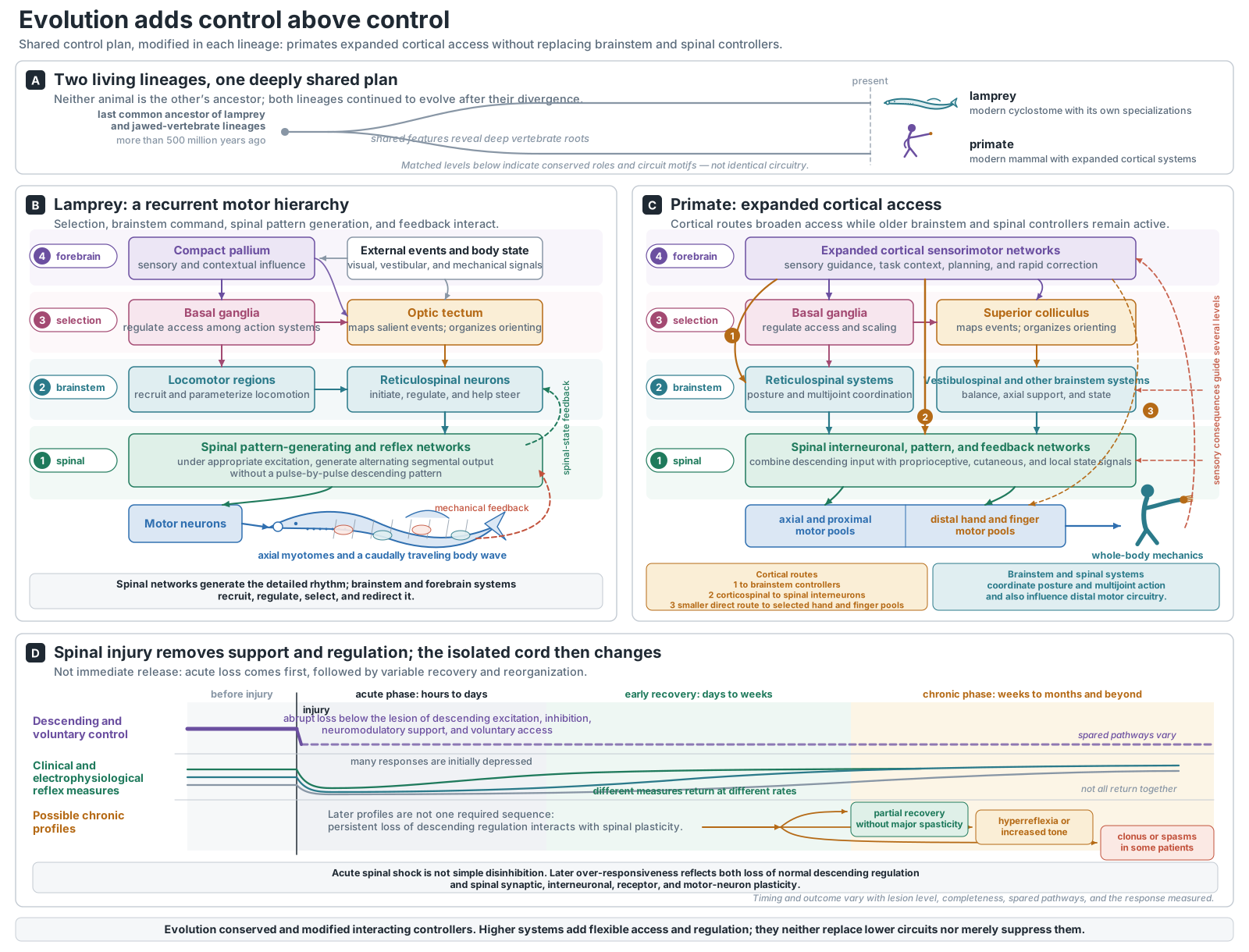
The vertebrate motor hierarchy is easier to see in animals whose pallium remains comparatively compact rather than undergoing the enormous expansion found in mammals. The lamprey is especially informative. It is not a surviving ancestor or a primitive unfinished vertebrate. It is a modern cyclostome with its own specializations. But lamprey and mammalian lineages diverged more than 500 million years ago, and their shared circuitry reveals how much of the vertebrate motor plan was already present before that separation. Sten Grillner and his colleagues have used the unusual accessibility of this nervous system to connect ion channels, identified neurons, spinal networks, brainstem commands, and whole-animal behavior within one comparative program [@grillner2021evolution].
An isolated lamprey spinal cord can generate alternating activity resembling swimming when supplied with appropriate excitatory drive. Excitatory interneurons, commissural inhibition, intrinsic membrane properties, and segment-to-segment coupling organize a traveling wave along the body. The detailed rhythm is generated within the spinal cord rather than dictated pulse by pulse from the forebrain [@grillner2003motor; @grillnerelmanira2020].
The spinal pattern is nevertheless not self-sufficient behavior. Reticulospinal neurons in the brainstem initiate and regulate locomotion, alter speed, and contribute to steering. During fictive locomotion, identified lamprey reticulospinal neurons are themselves recruited in relation to the ongoing rhythm [@kasickigrillner1986]. Sensory feedback from the bending body further adjusts the pattern. Above the brainstem, tectal and basal-ganglia systems influence which orienting or locomotor controller gains access to the downstream machinery. A comparatively compact nervous system therefore displays several nested levels:
- spinal networks generate the detailed motor pattern;
- brainstem systems recruit and parameterize those networks;
- midbrain and basal-ganglia circuits select among available action systems;
- pallial systems add sensory and contextual influence.
This architecture captures the evolutionary argument developed in Chapter 30. Later systems did not need to invent locomotion by specifying every motoneuron discharge. They gained influence over controllers that already knew how to coordinate the body. Comparative work across vertebrates supports this picture of conserved lower controllers brought under increasingly flexible forebrain influence [@grillner2021evolution]. Computational and physiological work in lamprey shows how simple changes in rostral or descending drive can alter speed, direction, and phase throughout a large spinal network [@kozlov2009simple].
Mammalian evolution added major capacities, especially expanded control of limbs, hands, and fingers. The corticospinal system provides primates with unusually direct access to spinal interneurons and motor neurons serving distal muscles. That addition increased flexibility and fractionation, but it did not make brainstem and spinal systems obsolete. A human reach still depends on reticulospinal stabilization, spinal sensory gating, motoneuron recruitment, and the mechanics of the limb. New control was layered onto old control.
What spinal injury reveals about hierarchy
Spinal cord injury exposes both sides of this relation. Immediately after a severe acute injury, reflexes below the lesion are often reduced or absent during spinal shock. This is not what a simple “the brain inhibits reflexes” model predicts. The cord has also lost descending excitation and neuromodulatory support, and motor neurons and interneurons enter a profoundly altered state.
Reflexes then return in a sequence over days and weeks. In many patients, they later become exaggerated, and spasticity, clonus, or spasms emerge. The chronic state is not merely the release of an intact reflex from cortical restraint. Loss of descending inhibition matters, but so do changes in sensory transmission, interneuronal circuitry, receptor expression, and motor-neuron intrinsic excitability. Persistent inward currents can recover without normal descending regulation and amplify afferent input into sustained contractions [@ko1999spinalshock; @little1999hyperreflexia; @damico2013spasms].
The clinical progression therefore supports a hierarchical view more strongly than a simple inhibitory one. Higher levels normally provide excitation, inhibition, neuromodulation, and task-dependent configuration. Remove them and the lower controller first loses essential support; later it reorganizes and can become over-responsive. The spinal cord is neither a helpless cable nor an autonomous motor animal. It is a powerful controller whose useful range depends on its place in the larger hierarchy.
Brainstem pathways configure the body
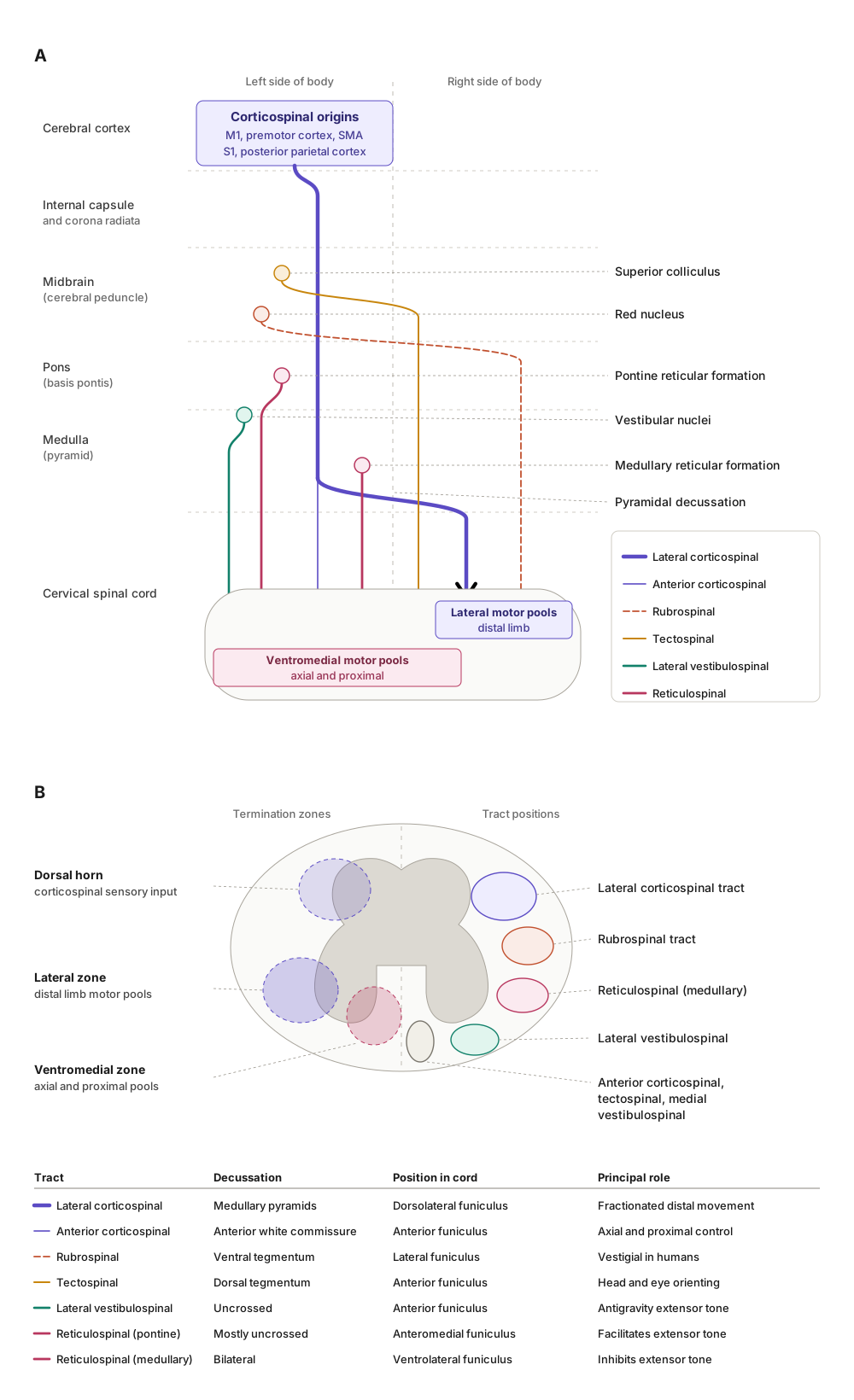
Several descending pathways arise in the brainstem and project through the spinal cord. Introductory diagrams often divide them into ventromedial systems for axial and proximal musculature and dorsolateral systems for distal musculature. The distinction is useful as an anatomical and functional bias, but it is not a clean separation. Whole actions require coordination across both domains, and several pathways influence muscles outside the category assigned to them.
Reticulospinal systems
The reticulospinal tracts arise from distributed reticular formations in the pons and medulla. Their projections are extensive, often bilateral, and heavily mediated through spinal interneurons. They contribute to posture, locomotion, orienting, startle, reaching, and the coordination of muscles across many joints. Because they can recruit broad patterns efficiently, reticulospinal pathways are well suited to controlling the background and whole-body conditions within which a more focal movement occurs.
Their role is not limited to trunk and shoulder. Primate and human evidence indicates that reticulospinal pathways can influence hand and finger muscles, especially coordinated whole-hand actions. StartReact is not a selective assay of the reticulospinal tract, but the finding that a startling sound can release a prepared grasp more readily than an individuated finger movement has been interpreted as evidence for reticulospinal access to intrinsic hand muscles. Highly individuated finger movements remain especially dependent on corticospinal control [@honeycutt2013reticulospinal]. After corticospinal injury, reticulospinal pathways may support useful recovery of gross movement while also contributing to stereotyped flexor synergies that limit fractionation.
Vestibulospinal systems
The vestibulospinal tracts transform information about head motion and orientation relative to gravity into postural adjustments. The lateral vestibulospinal tract has strong effects on extensor and antigravity systems, while medial vestibulospinal projections contribute especially to head and neck stabilization. These are not conscious balance commands. They are fast pathways through which vestibular evidence changes the gain and pattern of spinal motor circuits.
Tectospinal and rubrospinal systems
The tectospinal tract arises from the superior colliculus and contributes to orienting movements of the head and neck toward salient events. It belongs to a larger tectal architecture that coordinates gaze and body orientation rather than operating as an isolated head-turning wire.
The rubrospinal tract, arising from the red nucleus, is prominent in many mammals and contributes to limb control. It is much less prominent in humans than in many other mammals, and its functional contribution is difficult to isolate from corticospinal and reticulospinal control. It should therefore not be given equal weight in a human chapter merely because it appears symmetrically in an anatomical diagram.
These pathways make anticipatory posture more intelligible. Before a rapid arm movement, activity can change in leg, trunk, and respiratory muscles in preparation for the disturbance the arm will create. Brainstem pathways are central to postural coordination, but the adjustment should not be assigned to the brainstem alone. Motor, premotor, supplementary, cerebellar, basal-ganglia, and brainstem systems all contribute depending on the task. A calf muscle firing before a deltoid is evidence for distributed anticipatory control, not proof that the postural command bypassed cortex.
The corticospinal addition
The corticospinal tract supplies a major descending route from cerebral cortex to the spinal cord. Its fibers arise not only from primary motor cortex but also from premotor, supplementary motor, somatosensory, and parietal territories. The proportions vary with species, tracing method, and the boundary used for each cortical field. The important point is that corticospinal output is distributed across a sensorimotor network rather than issued by one cortical command strip.
Axons descend through the corona radiata and internal capsule, enter the cerebral peduncles of the midbrain, pass through the ventral pons, and collect into the medullary pyramids. These pyramids are the elongated elevations visible on the ventral surface of the medulla. Their name refers to that shape—not to the later crossing of the fibers, and not to an origin exclusively in giant pyramidal neurons.
Near the caudal medulla, most corticospinal axons cross in the pyramidal decussation and descend in the contralateral lateral corticospinal tract. A smaller component continues more ventrally or ipsilaterally; many of those fibers cross near their spinal termination or influence bilateral interneuronal networks. Tracing in rhesus monkeys found a strong medullary crossing bias together with extensive additional crossing and bilateral termination within the cervical cord [@rosenzweig2009]. The clinically important rule remains that one cerebral hemisphere exerts especially strong control over the opposite distal limb. The anatomical reality is more bilateral than “left brain moves only right body.”
The corticobulbar system follows the same general principle for cranial motor nuclei, but many cranial muscles receive bilateral cortical influence. The lower face and parts of tongue control show stronger contralateral bias than many jaw, pharyngeal, laryngeal, and upper facial systems. This is why a unilateral cortical lesion can weaken the contralateral lower face while sparing forehead movement better than a peripheral facial-nerve lesion does.
Direct access to the primate hand
Most corticospinal effects reach motor neurons through spinal interneurons. In primates, however, a subset of corticospinal neurons forms direct, monosynaptic cortico-motoneuronal connections. These cells are concentrated in the caudal part of primary motor cortex, including cortex buried in the anterior bank of the central sulcus, and are especially associated with control of hand and finger muscles [@rathelotstrick2006; @rathelotstrick2009].
Direct access does not mean one cortical neuron controls one muscle in isolation. Cortico-motoneuronal cells influencing a particular digit muscle are distributed broadly, and territories for different muscles overlap. Individual corticospinal neurons can also diverge to several motor pools. This architecture supports flexible combinations rather than a keyboard in which every muscle occupies one discrete key.
The evolutionary significance is substantial. Older vertebrate systems can orient, stabilize, swim, walk, and generate coordinated limb patterns through brainstem and spinal circuitry. Expanded corticospinal access allows primates to impose finer, more rapidly reconfigurable control on distal effectors. The pathway is especially important for fractionating finger movements, shaping precision grips, and learning arbitrary hand actions. It adds a high-bandwidth route into the existing hierarchy; it does not bypass the hierarchy altogether.
Primary motor cortex: map, output, and feedback
The primary motor cortex, or M1, occupies Brodmann area 4 immediately anterior to the central sulcus. It is the cortical region with the lowest thresholds for evoking movement and a major source of corticospinal output. Yet nearly every simple statement about what it “represents” becomes misleading when turned into an exclusive theory.
A map with overlap
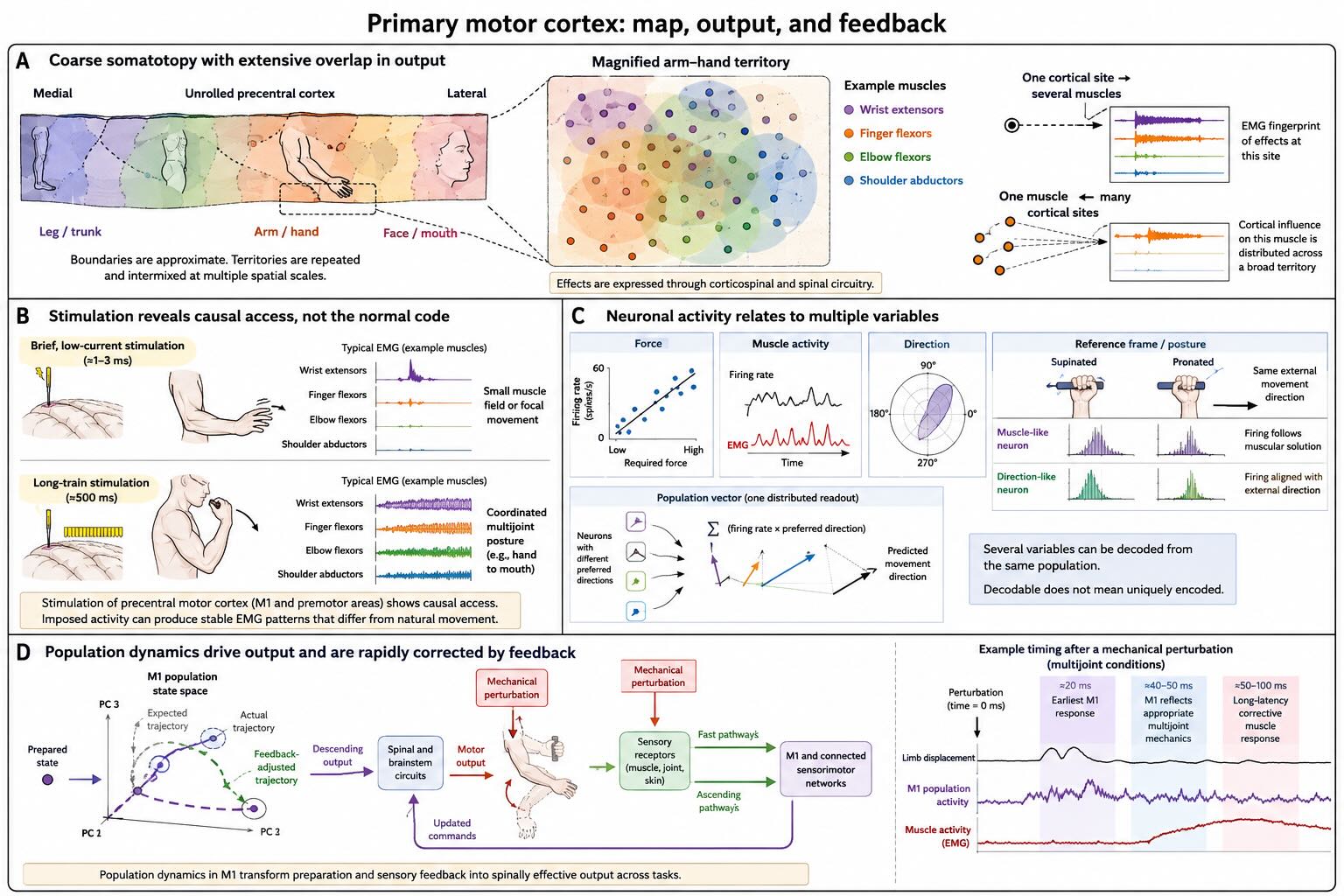
M1 has a broad somatotopic arrangement. Leg-related territory lies mainly on the medial wall, face and oropharyngeal territory lies laterally, and arm and hand territory occupies the intervening cortex. The familiar motor homunculus captures this large-scale order and the disproportionate cortical territory associated with the hand and face.
Within a body region, however, the map is overlapping, repeated, and fractured. Neurons influencing one muscle are distributed across a broad territory and intermixed with neurons influencing other muscles. A given cortical site can affect several muscles; one motor pool can receive influence from many cortical sites. The homunculus is therefore useful as a geographic orientation and poor as a wiring diagram.
The amount of cortical territory devoted to a body part also cannot be explained solely as “fineness of control.” Dexterity, sensory input, behavioral repertoire, corticospinal access, and experience all contribute. Motor maps can change with training, injury, and use. The distortion is biologically meaningful, but it is not a fixed scale printed onto cortex.
Stimulation depends on how stimulation is delivered
Electrical stimulation helped establish the motor map, but the result depends on the stimulus. Brief, low-current intracortical stimulation can evoke short-latency activity in particular muscles or small movements around one or a few joints. Longer trains can evoke coordinated multijoint actions, such as bringing the hand toward the mouth or moving the arm into a defensive region of space [@graziano2002complex].
The long-train findings are important because they reveal that precentral networks can access coordinated patterns. They do not establish that each cortical location stores one complete natural action. Long stimulation synchronizes neural elements over a duration and spatial extent unlike ordinary activity. Measurements of the resulting electromyography show patterns that can remain relatively fixed through the train and differ from the time-varying patterns of natural goal-directed movement [@griffin2014emg]. Stimulation establishes causal access to an output; it does not, by itself, reveal the normal code.
Muscles, forces, and movement variables
Early recordings by Edward Evarts showed that pyramidal-tract neuron activity varied with the force required to perform a movement [@evarts1968force]. Later studies found neurons whose firing covaried with direction, velocity, posture, joint configuration, muscle activity, or combinations of these variables. Kakei and colleagues designed a wrist task that dissociated muscle activity, joint movement, and movement in external space. Some M1 neurons behaved in a muscle-like manner; others followed movement direction more independently of the specific muscular pattern [@kakei1999muscle].
The correct conclusion is not “M1 codes movements rather than muscles.” Both relationships are present. Which one is most visible depends on the task, limb mechanics, reference frame, time within the movement, and the population being sampled.
The population vector introduced by Apostolos Georgopoulos provides one influential population-level description. Individual neurons are broadly tuned for movement direction; weighting each neuron’s preferred direction by its activity and summing across the population can predict the direction of a reach [@georgopoulos1986population]. This was a major demonstration that precise behavior can be related to a distributed neural population rather than a single dedicated cell.
But decoding is not the same as identifying the brain’s one native coordinate system. Direction can often be decoded because direction covaries with muscle activity, posture, target location, and dynamics. Population-vector success shows that information is present in the activity. It does not prove that downstream circuits literally add arrows or that direction is the uniquely privileged variable.
Population dynamics
A different approach asks how activity evolves through time. During reaching, M1 populations follow structured trajectories through a high-dimensional neural state space. Some of this activity has rotational or other lawful dynamical structure, suggesting that recurrent cortical networks help generate temporally organized output rather than representing a succession of static labels [@churchland2012dynamics].
The dynamical account need not eliminate muscles, forces, or sensory feedback. A recurrent network can display internal dynamics while embedding output that is appropriately related to muscles. Russo and colleagues showed that motor-cortical population activity contains muscle-like commands within a larger, less tangled structure that may make the evolving output robust to noise [@russo2018]. The useful scientific question is therefore not whether M1 is really a muscle map, a movement map, or a dynamical system. It is how its distributed dynamics transform preparation and sensory input into spinally effective output across different tasks.
Feedback belongs inside motor cortex
Mechanical perturbations reveal this transformation directly. Because motion at one joint can be caused by torques at another, an effective correction must integrate the mechanics of the limb. In monkeys, M1 neurons begin expressing the appropriate multi-joint correction rapidly after a perturbation; in humans, transcranial magnetic stimulation over M1 can interact with the corresponding long-latency muscle response. M1 is therefore part of a fast feedback controller, not only a source of precomputed commands [@pruszynski2011feedback].
This observation dissolves another false opposition. Voluntary movement and reflex correction are not executed by wholly separate systems. The corticospinal pathway can contribute to both. What changes is the source and timing of the information entering the recurrent controller.
Brain–computer interfaces exploit the fact that useful information about intended movement can be decoded from cortical populations. In a classic study, monkeys used motor-cortical activity to control a robotic arm and gripper well enough to feed themselves [@velliste2008bci]. Intracortical recordings have also allowed people with tetraplegia to reach and grasp with a robotic arm [@hochberg2012bci].
These demonstrations establish something powerful: population activity can remain sufficiently structured to control an external device even when the ordinary route to muscle is unavailable. They do not show that cortex naturally describes movement in exactly the variables chosen by the decoder. An engineer can decode cursor velocity, endpoint position, grip state, muscle activation, or another correlated variable from overlapping activity. The success of the interface depends on information in the signal, decoder design, feedback, and learning by the user.
A brain–computer interface is therefore both a neuroprosthesis and an experiment in closed-loop adaptation. The user learns the decoder while the decoder learns the user. Its success supports distributed cortical control, but it should not be used as a shortcut around the representation debate.
Premotor and medial frontal cortex organize access to M1 and the cord
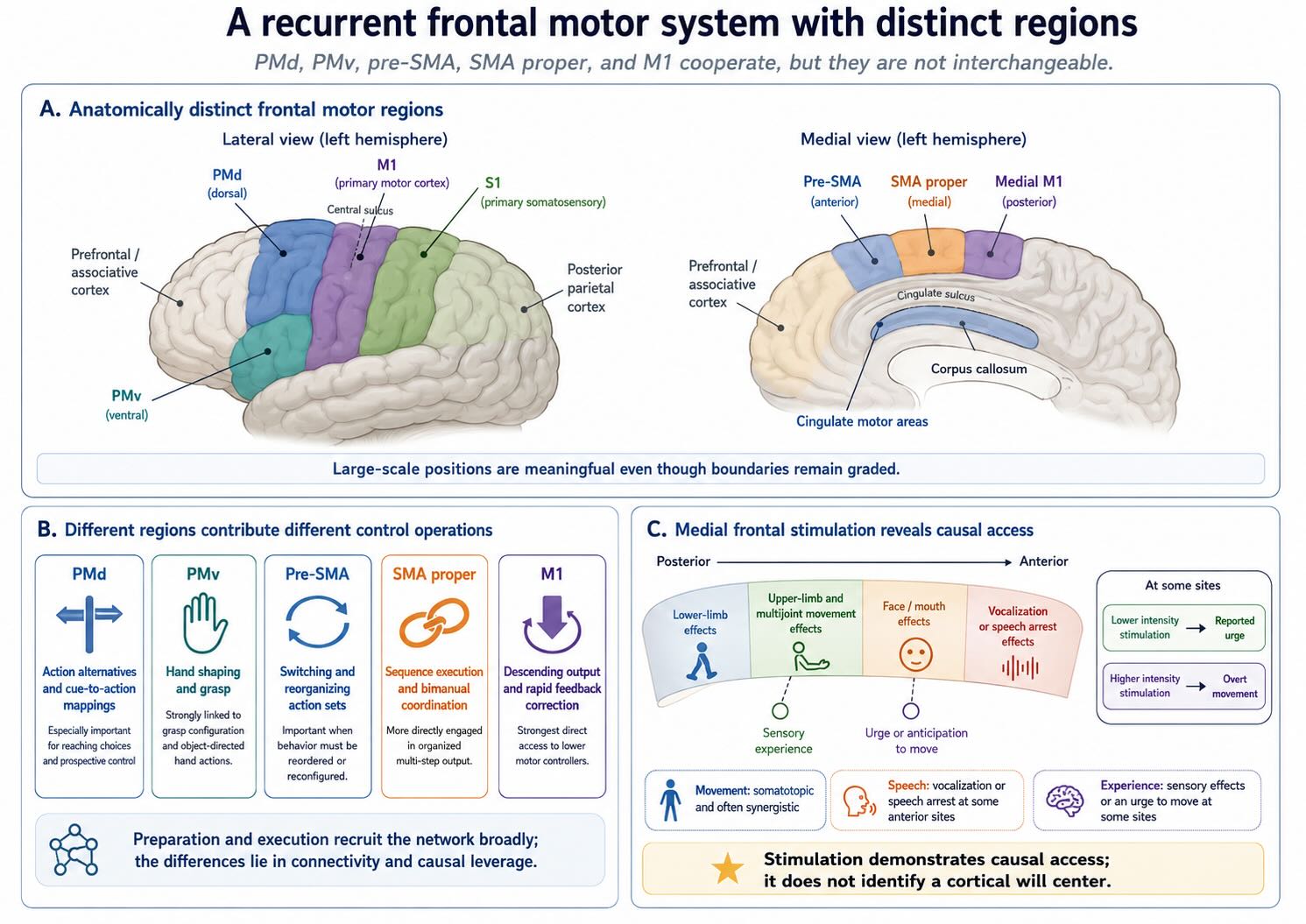
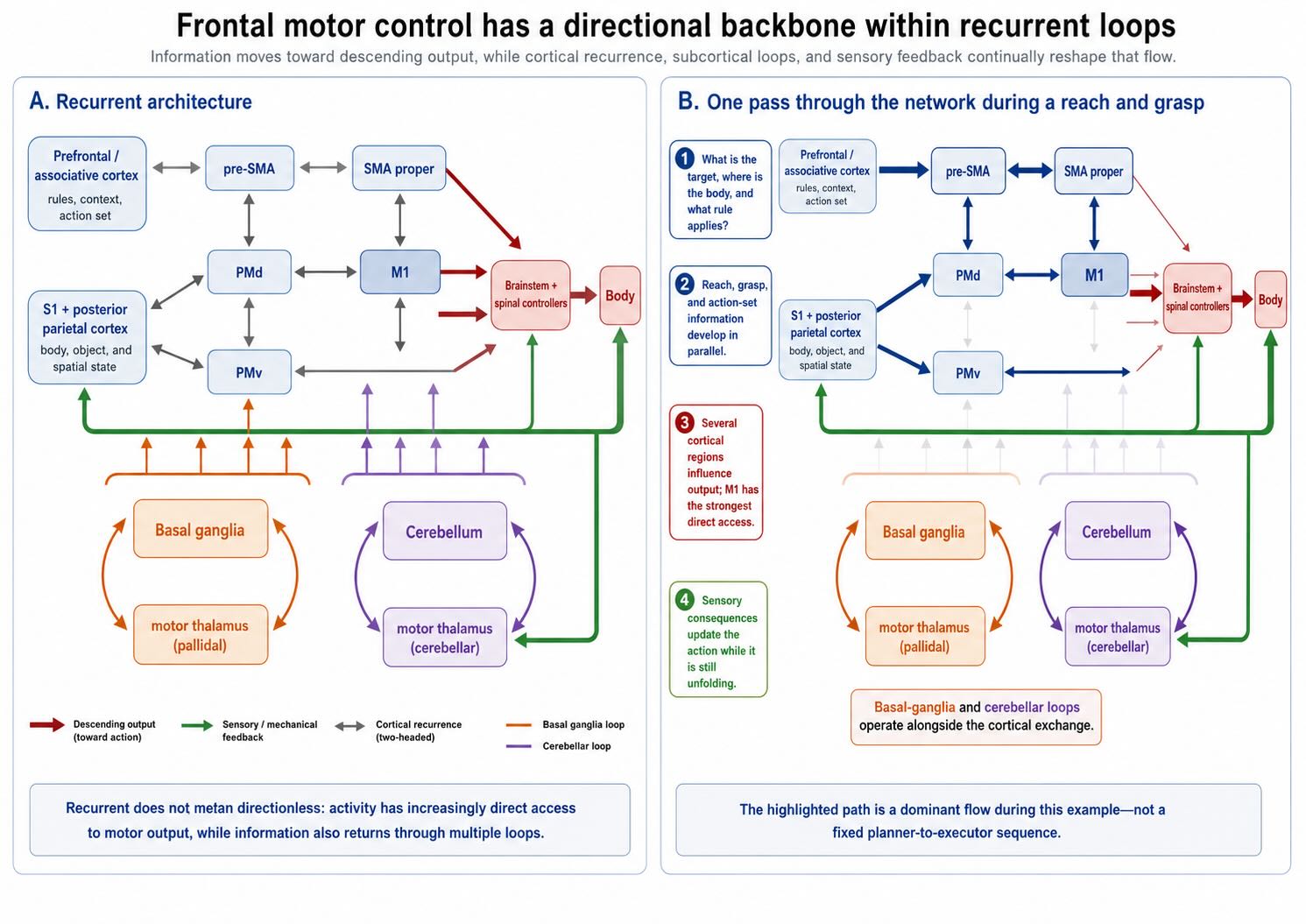
Primary motor cortex is embedded in a larger frontal system. The classical premotor cortex on the lateral surface and the supplementary motor complex on the medial wall contain several anatomically and functionally distinguishable regions. Their activities often begin before movement, but it is too simple to arrange them as abstract planner, then M1 executor, then spinal muscle.
Lateral premotor cortex
The dorsal premotor cortex, or PMd, participates in selecting and preparing reaching actions, mapping sensory and arbitrary cues onto movements, and representing potential actions before one is chosen. When more than one reach is available, PMd populations can initially reflect several alternatives and then evolve toward the selected action [@cisekkalaska2005]. The region is not restricted to visually guided movement: inactivation studies show important contributions to internally generated learned sequences as well [@ohbayashi2016pmd].
The ventral premotor cortex, or PMv, is especially important in networks for hand shaping and grasp. In macaques, area F5 neurons are active for particular grasp configurations, and PMv can modulate M1 output to hand muscles in a grasp- and muscle-dependent manner [@prabhu2009pmv]. The next chapter will place this circuit within a larger parietofrontal system that converts visual information about an object into an action of the hand.
Preparation is distributed across PMd, PMv, M1, parietal cortex, basal ganglia, cerebellum, and thalamus. M1 itself can show preparatory activity, and premotor areas remain active during execution. The distinction is one of relative contribution and connectivity, not a serial transfer in which a finished plan is handed forward.
SMA proper and pre-SMA
The medial frontal territory historically called the supplementary motor area is commonly divided into a posterior SMA proper and a more anterior pre-SMA. SMA proper is strongly connected with M1 and spinally projecting systems and contributes to preparation, execution, bimanual coordination, and learned action sequences. Pre-SMA is more strongly connected with prefrontal and associative systems and is especially recruited when a sequence, rule, or action set must be selected, reorganized, or switched.
The old contrast between externally guided premotor action and internally generated SMA action remains a useful first approximation but fails as a strict rule. PMd can be necessary for memory-guided sequences; SMA regions respond to external information; and both systems combine learned rules with current sensory evidence. Similarly, “the SMA stores sequences” is too simple. Neurons across PMd, pre-SMA, SMA proper, M1, basal ganglia, and parietal cortex can carry sequence-related activity at different stages. Recent direct comparisons suggest complementary roles rather than one sequence center [@nakajima2022sequences].
Stimulation, movement, and the urge to move
Direct stimulation of human medial frontal cortex provides unusually vivid evidence. In work I conducted with Itzhak Fried and colleagues, stimulation of supplementary motor cortex evoked somatotopically organized responses that were often synergistic and involved more than one joint. Some sites produced vocalization or speech arrest; some evoked sensory experiences; and some produced an urge or anticipation that a movement was about to occur [@fried1991sma].
These observations matter, but they require the same caution used for M1 stimulation. A coordinated movement evoked from supplementary motor cortex shows that the stimulated tissue has causal access to a distributed motor network. A reported urge shows that stimulation can alter the experience preceding action. Neither finding identifies a single cortical origin of voluntary will. Electrical current recruits local cells, fibers, and connected regions in an artificial pattern, and the patients were being studied in a clinical setting with epilepsy.
The historical details are nevertheless worth preserving. Some stimulations produced complex two-handed or whole-body movements that appeared purposeful to an observer. One stereotyped bilateral gesture became known informally in the laboratory as the “Pope’s move.” A low-intensity stimulation could evoke an urge without overt movement, while a higher intensity at or near the same site could evoke the movement. The sequence is compatible with graded recruitment of a larger network, but it does not prove that the conscious urge is a command issued before the motor system acts. It is evidence to explain, not a miniature theory of volition.
Alien-hand phenomena should also not be assigned simply to SMA damage. They include several clinical variants associated with medial frontal, callosal, posterior cortical, thalamic, or degenerative pathology. Some involve grasping and utilization behavior; others involve intermanual conflict or a limb experienced as foreign. The syndrome illustrates distributed failures of agency and control, not one medial-frontal “ownership center.”
Motor equivalence without a late muscle translator
A signature provides a useful example of motor equivalence. A person’s name remains recognizably theirs when written at different sizes, with the nondominant hand, or even with an unusual effector, although accuracy declines. The preserved feature cannot be a stored list of activations for one set of finger muscles. Some aspect of the spatial and temporal organization can be transferred across effectors.
Bernstein used such flexibility to frame the degrees-of-freedom problem [@bernstein1967coordination]. The body offers many joint and muscle combinations that can satisfy the same task. Modern control accounts often treat this as motor abundance: the extra degrees of freedom permit compensation, flexibility, and selective correction rather than presenting only a computational burden.
It does not follow that an abstract plan is created at the front of cortex and translated into muscles only at the last moment. Premotor activity can reflect limb biomechanics; M1 activity can reflect task variables; spinal circuits can implement flexible synergies; and sensory feedback reshapes the action throughout execution. Abstraction and embodiment coexist at several levels. Motor equivalence shows that the system can preserve task-relevant structure while changing the means, not where a single complete plan resides.
When the route fails
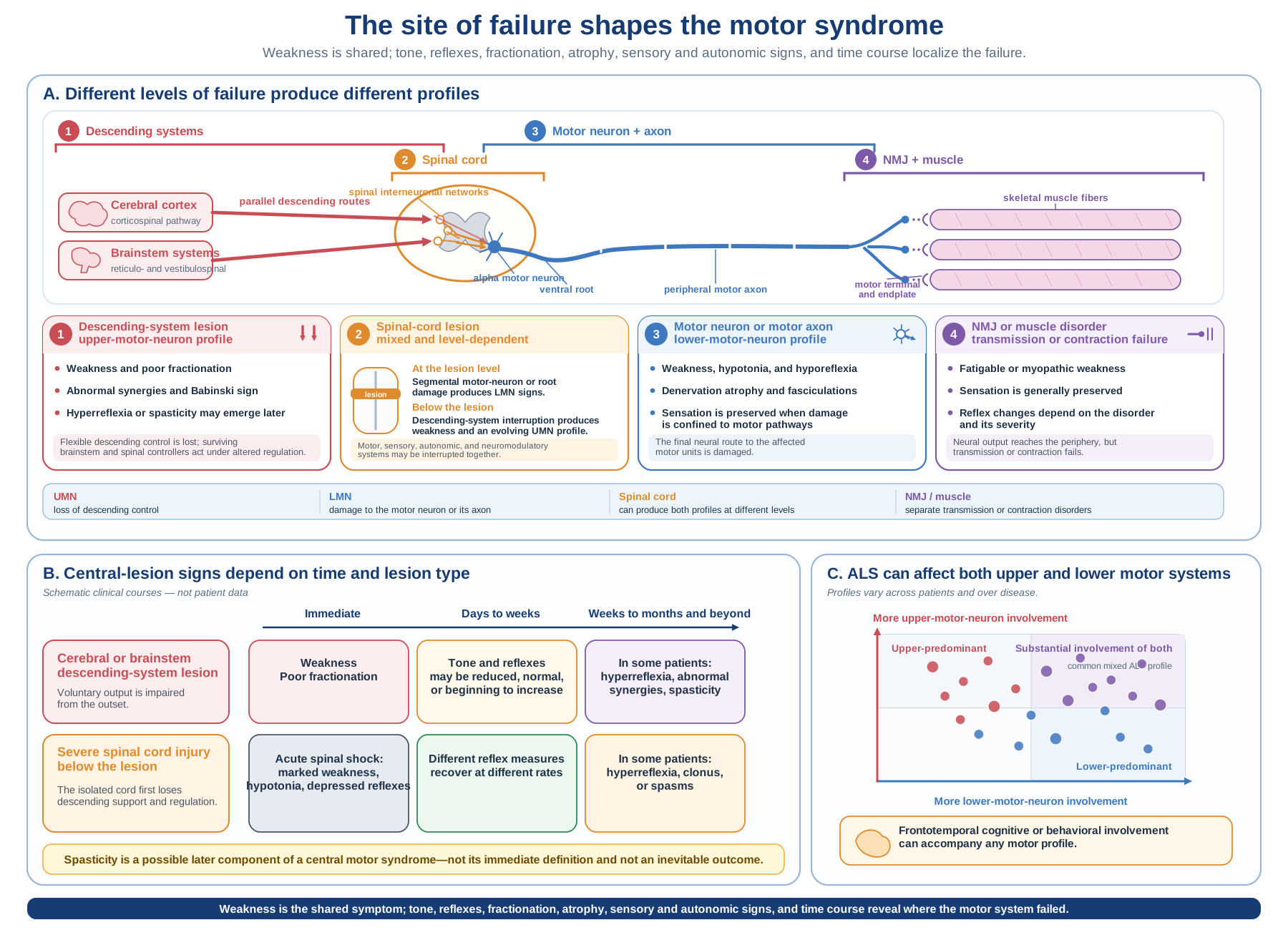
Motor-system lesions are often introduced through a contrast between lower-motor-neuron and upper-motor-neuron syndromes. The distinction remains clinically valuable, but it is a profile rather than a perfect two-box taxonomy.
| Muscle or neuromuscular junction |
Weakness; fatigability or myopathic loss of force; sensation often preserved |
Neural output reaches the periphery but force transmission or contraction fails |
Reflexes vary with disease and severity; the motor neuron itself may be intact |
| Lower motor neuron, ventral root, or motor axon |
Weakness, reduced tone, reduced reflexes, denervation atrophy, fasciculations |
The final neural route to the affected motor units is damaged |
Complete paralysis requires severe loss; surviving axons can sprout and enlarge motor units |
| Corticospinal and related descending systems |
Weakness, slowed and poorly fractionated movement, abnormal synergies, Babinski sign, hyperreflexia and later spasticity |
Flexible descending control is lost while spinal and brainstem circuits remain |
Acute lesions can initially reduce tone and reflexes; “upper motor neuron” is a syndrome involving several pathways, not one tract |
| Spinal cord across multiple systems |
A level-dependent mixture of descending motor loss, sensory loss, autonomic dysfunction, and changing reflex state below the lesion |
Ascending, descending, segmental, and neuromodulatory systems are interrupted together |
Early spinal shock can be followed by reflex recovery, hyperreflexia, clonus, and spasms; incomplete injuries preserve variable pathways |
A lower-motor-neuron lesion removes or weakens the final path to specific motor units. Reflexes are reduced because the efferent limb of the reflex is damaged. Denervated muscle fibers atrophy, and unstable surviving motor units can produce fasciculations. Poliomyelitis, peripheral motor-nerve injury, and disorders of anterior-horn cells can produce this pattern.
An upper-motor-neuron syndrome is not simply “damage above the alpha motor neuron.” It commonly reflects injury to corticospinal and associated descending pathways. Voluntary force is weak, fine fractionation is impaired, and movements can collapse into stereotyped synergies. Hyperreflexia and spasticity often emerge over time, but the acute phase after cortical, brainstem, or spinal injury can include flaccidity and reduced reflexes. Spasticity is usually defined by a velocity-dependent increase in resistance to passive stretch; it is one component of the broader syndrome, not a synonym for all post-lesion stiffness.
Amyotrophic lateral sclerosis should not be used as a pure example of alpha-motor-neuron destruction. ALS commonly affects both upper and lower motor neurons, with the balance varying across patients and disease stages. It can also involve frontotemporal cognitive or behavioral systems. A person may retain much knowledge and intention while losing the capacity to act, but it is no longer accurate to say that plans are invariably “perfectly intact” and merely trapped behind a failed final path [@chio2019alscognition].
A spinal injury also should not be placed under lower-motor-neuron disease simply because it causes paralysis. Damage at the lesion level can injure segmental motor neurons and roots, producing lower-motor-neuron signs in those muscles. Below the lesion, paralysis is principally caused by interruption of descending pathways, and the later pattern may include upper-motor-neuron signs. Level, completeness, spared tracts, time since injury, and secondary changes all determine the profile.
Unilateral cerebral injury usually causes greater weakness on the opposite side, especially in the distal limb. Yet bilateral and ipsilateral cortical activity can be measured during unilateral movement, and uncrossed or recrossing pathways can contribute to recovery. The difficult clinical question is not whether ipsilateral influence exists—it does—but when that influence supports useful fractionation rather than compensatory mass movement. That balance varies with lesion, pathway, task, and stage of rehabilitation.
How these circuits are studied
The motor system is unusually accessible to experiment because neural activity can be related to force, electromyography, movement, and mechanical perturbation. That access is powerful, but each method answers a different question.
Electromyography, or EMG, measures electrical activity associated with active motor units. It reveals timing, recruitment, co-contraction, and response to perturbation. Surface EMG cannot identify every active motor unit or determine which central pathway produced the activity. Intramuscular recordings can isolate single units but sample only a small fraction of a pool.
Tendon taps and mechanical perturbations probe feedback loops. A tendon tap emphasizes a brief spindle-driven response; controlled robotic perturbations can separate short- and long-latency components and test whether the response changes with task. The H-reflex, produced by electrically stimulating Ia afferents, bypasses the spindle and is therefore not identical to a natural stretch reflex. All of these measurements sample circuit excitability under specified conditions rather than revealing one fixed reflex strength.
Stimulation establishes causal access. Stimulation of a ventral root shows that its axons can drive muscle. Stimulation of M1 or SMA shows that the recruited network can influence movement or experience. The result depends on intensity, duration, electrode geometry, state, and the fibers activated. What a region can be forced to produce is not automatically what it normally encodes.
Single-neuron recording can relate firing to force, muscles, direction, preparation, or feedback. Population recording can reveal distributed structure and dynamics that single-cell descriptions miss. Both are samples from a larger network, and correlations among variables make exclusive interpretations difficult.
Lesions and disease show what is necessary, but natural lesions cross cell types, tracts, vascular territories, and white-matter connections. Acute effects differ from chronic compensation. A syndrome is strongest evidence when anatomy, time course, physiology, and behavior converge.
Comparative preparations reveal the hierarchy. Isolated spinal cords establish what local circuitry can generate under artificial activation. Brainstem–spinal preparations reveal descending parameter control. Lamprey, cat, rodent, monkey, and human experiments answer different questions. Conservation should be inferred from homologous cell types, pathways, transmitters, and circuit operations—not from calling one living animal an earlier version of another.
From force to action in the world
The path to muscle solves only part of the problem. Motor neurons can generate force, spinal circuits can stabilize and coordinate, brainstem pathways can recruit whole-body patterns, and cortex can impose flexible distal control. None of this specifies which object to reach toward, how a retinal location becomes a hand-centered target, or how the fingers should be shaped for the object’s geometry.
Those questions cannot be answered by adding more detail to the corticospinal tract. They require the interaction of vision, proprioception, posterior parietal cortex, premotor cortex, and the changing body. The next chapter turns from getting to the muscle to acting on the seen world.
We are confident that:
- Alpha motor neurons provide the final ordinary neural route to extrafusal skeletal muscle, while gamma motor neurons regulate intrafusal spindle mechanics.
- Muscle force is graded through motor-unit recruitment and firing rate, with broadly size-ordered recruitment from smaller to larger units under many conditions.
- Motor neurons and spinal interneurons are state-dependent processors influenced by sensory input, descending pathways, inhibition, neuromodulation, and intrinsic membrane currents.
- Stretch responses unfold through multiple pathways and latencies. Short-latency spinal components coexist with later task-sensitive responses that can involve motor cortex.
- Reciprocal inhibition, recurrent inhibition, presynaptic sensory gating, withdrawal circuits, and crossed coordination are genuine spinal mechanisms whose expression is configured by task and descending state.
- Reticulospinal, vestibulospinal, tectospinal, rubrospinal, corticospinal, and corticobulbar systems descend in parallel. Their proximal/distal and bilateral/contralateral specializations are biases rather than absolute divisions.
- Most corticospinal axons cross, producing a strong contralateral bias, but ipsilateral, segmentally crossing, and bilaterally terminating components are anatomically real.
- Direct cortico-motoneuronal connections are especially developed in primates and provide M1 with unusually direct access to hand and finger muscles.
- M1 has coarse somatotopy with extensive overlap, contributes to descending output, and participates in rapid sensory-feedback control.
- Severe spinal injury can produce early spinal shock followed by reflex recovery and, in many patients, later hyperreflexia, spasticity, clonus, or spasms.
We have good reason to think that:
- The vertebrate hierarchy preserved older spinal and brainstem controllers while later pallial and corticospinal systems increased the ability to select, parameterize, redirect, and fractionate their output.
- Lamprey circuitry captures conserved control principles linking forebrain and midbrain selection systems to reticulospinal command neurons and spinal pattern generators.
- Fusimotor drive adjusts spindle sensitivity according to behavioral demands rather than merely preventing slack.
- Reticulospinal pathways contribute to coordinated hand actions and can support recovery after corticospinal damage, although often with less fractionation.
- M1 population dynamics provide a mechanistic level that complements relations to force, muscles, direction, posture, and feedback.
- PMd, PMv, pre-SMA, SMA proper, and M1 make different but overlapping contributions to action selection, grasp, sequence organization, preparation, execution, and feedback.
We remain genuinely unsure about:
- Whether one reference-configuration, equilibrium-point, optimal-feedback, or dynamical formulation can provide the most general account of how descending systems exploit spinal feedback.
- How the detailed spinal pattern-generating architecture established in lamprey, cat, and other preparations maps onto ordinary intact human locomotion.
- Which variables provide the most explanatory description of M1 across behaviors, or whether different tasks recruit different mixtures of muscle-like output, task variables, and autonomous population dynamics.
- How naturally evoked cortical activity relates to the coordinated actions produced by long-train electrical stimulation.
- How corticospinal, reticulospinal, propriospinal, and bilateral cortical routes divide labor during recovery from stroke or spinal injury.
- What the urge to move evoked by medial-frontal stimulation reveals about conscious intention, agency, and the causal organization of voluntary action.