6 The Hypothalamus
Overview: The Regulated Body
The first unit argued that the brain is best understood as a control system, shaped by evolution to govern a body and maximize biological fitness. From this perspective, cognition is a late-arriving elaboration in the service of allostasis. This unit takes that argument down into the tissue. If the brain is a control system, it must contain the biological circuitry that actually does the regulating—the networks that sample the state of the body, determine what it needs, and command the responses that keep its internal variables within the narrow ranges life tolerates. The organization of this unit rests on a deliberately bold claim.
My strong claim is that this regulation begins in the hypothalamus.
Admittedly, this is a rhetorical simplification. Nothing in the brain truly “begins” in a single place. Regulation is distributed across the brainstem, midbrain, limbic forebrain, and cortex; for almost every behavior we will cover, the hypothalamus is one node in a highly complex loop rather than a lone commander. When I say regulation begins here, I mean something specific and defensible: this small structure is the crucial point of convergence. It is where the physical state of the body is read and the decision to defend that state is initiated. It is where an osmotic imbalance translates into thirst, a falling core temperature triggers shivering, and a metabolic deficit generates the motivation to forage. While downstream structures execute these commands and upstream structures arbitrate among them, the hypothalamus is where bodily need is converted into the imperative to act. Foregrounding it is a teaching choice designed to keep the body at the center of the story, not a claim that the hypothalamus works in isolation.
That choice is justified because the hypothalamus is easy to underrate. It accounts for less than one percent of total brain volume, yet damage to it disrupts nearly every regulatory system simultaneously—temperature, fluid balance, energy, reproduction, the stress response, and the sleep–wake cycle. It is the vertebrate solution to a hard, ancient problem: how to survive in a world of shifting temperatures, unreliable water, and unpredictable energy, when the body you are defending tolerates only slight deviations before it fails.
6.1 Homeostasis is not enough
The hypothalamus is classically described as the organ of homeostasis — the machinery that holds internal variables near their set points. Blood pH, core temperature, plasma osmolarity, blood glucose: each is defended, and the textbook image of that defense is the thermostat, waiting for a variable to drift past a threshold and then switching on a correction. This image is not wrong. Much of what the hypothalamus does really is error-correcting feedback of exactly this kind, and it is indispensable.
But pure feedback control — waiting for an error before acting — is a poor strategy for a body, and for a reason that recurs throughout this unit: biological corrections are slow. Water absorbed from the gut reaches the bloodstream over tens of minutes. Thermogenic responses build over minutes. Hormonal adjustments unfold over hours. A controller that waited for the error to appear before responding would not hold a variable steady; it would oscillate around the set point, overshooting in both directions. It would let the body dehydrate before drinking and then overdrink, let it cool before shivering and then overheat.
These oscillations are not a cosmetic problem. The troughs — hypothermia, hypoglycemia, hyponatremia — are states of sluggishness and cognitive impairment, exactly the moments when an animal can least afford to be slow. The peaks are states of physiological instability. In the wild, either extreme costs survival. The slowness of biological correction means that a body run on feedback alone spends much of its time impaired.
The way out is to act before the error appears. Using sensory cues and the residue of past experience, the hypothalamus predicts an upcoming need and initiates the correction in advance — drinking before the blood is concentrated, warming before the core has cooled, eating before fuel runs low. This anticipatory mode of regulation is called allostasis. The term was introduced by Peter Sterling and Joseph Eyer in 1988, who defined it as maintaining stability not by holding the internal milieu constant but by continually varying its parameters to match anticipated demand — “stability through change.” Taste, smell, gastric stretch, ambient temperature, time of day, and learned associations with food and water all serve as forecasting cues, and the hypothalamus weights these early predictors heavily against the late, definitive feedback from the blood. Thirst neurons fall silent within seconds of drinking, long before a single molecule of water has been absorbed. Hunger circuits quiet at the mere sight of food. Thermoregulatory defense begins the moment a cold environment is encountered, not when the body has actually cooled.
It would be easy to read allostasis as a mere optimization — a layer of feedforward gain added to a control system that is fundamentally reactive, trimming the latency problem without changing its character. Sterling’s claim is stronger and more interesting than that, and it is worth stating in its strong form. His argument is that feedback cannot be the primary regulatory mechanism at all. Error-correction by feedback is intrinsically inefficient: it permits the error to occur, tolerates the impairment that the error produces, and pays the metabolic cost of a correction that a better-designed system would have pre-empted. Feedback is real and ubiquitous, but on this view it is the fallback, not the foundation. The foundation is prediction, and the body is built around an organ — the brain — whose central job is to forecast need and allocate resources before the need is felt.
The cleanest evidence that prediction runs ahead of need, rather than merely chasing it quickly, comes from the biological clock, and this is in fact where Sterling’s case begins. Many physiological variables do not wait for any deviation before they move. Cortisol, core temperature, and a battery of metabolic hormones begin to rise in the hours before dawn, climbing toward their waking values while the animal is still asleep and nothing whatever has yet gone wrong. There is no error here to correct — no low blood pressure, no drop in fuel, no cold — only an endogenous oscillator running ahead of the day and preparing the body for demands that have not yet arrived. This is the decisive point against the “feedback-with-trim” reading: a purely reactive controller, however fast, can only respond to a deviation that already exists, whereas the pre-dawn cortisol rise is a response to a predicted state of the world generated entirely from within. Once it is granted that regulation can run with no error signal at all, the broader claim that prediction is primary and feedback secondary becomes hard to resist. It is no accident that the structure holding this anticipatory timetable — the suprachiasmatic nucleus, the master circadian clock — sits inside the hypothalamus itself. The organ that regulates the body also holds the body’s predicted schedule, and it regulates against that schedule as much as against the present moment. The circadian system is treated in full in Chapter 10, where this argument is taken up again from the side of mechanism.
A caution is in order, so as not to overstate the clock’s reach. Most allostatic regulation is not clock-driven but cue-driven and learned — the surge of insulin at the mere sight of a meal, the foraging decision weighed before any deficit bites, the reward system assigning priorities among competing future needs. These depend on association and memory, not on an endogenous oscillator, and they are where most of the work in this unit actually lies. The clock is special precisely because it is the one case that is purely internal, and therefore the one case that cannot be explained away as feedback in disguise. It wins the argument in principle; the cue-driven systems then carry it through the body.
This is the through-line of the entire unit. Almost every chapter that follows can be read as a study of one control system shifting from reactive homeostasis toward predictive allostasis — and of the machinery, and the metabolic cost, that the shift requires. Allostasis is not a theoretical embellishment laid on top of homeostasis. For an animal whose corrections are slow, it is an evolutionary necessity — and, if Sterling is right, it is not the embellishment but the main event, with feedback relegated to the role of catching the predictions that miss.
6.2 An ancient and conserved organ
Before turning to how the hypothalamus is built, it is worth establishing how old it is, because the conservation of this structure is part of why it can anchor a unit that moves freely between species. The hypothalamus is one of the oldest and most conserved regions of the vertebrate brain. Every vertebrate examined — from jawless fish like lampreys and hagfish, through bony fish, amphibians, reptiles, and birds, to mammals — has a recognizable hypothalamus in the ventral diencephalon. Across more than 500 million years of independent evolution, it has retained a strikingly similar organization and the same core jobs: regulating hormones, defending internal balance, and coordinating motivated behaviors like feeding and reproduction. The same basic machinery that keeps a fish alive is running, with modifications, inside you.
How do we know it’s the “same” structure?
Comparative neuroanatomists identify homologous structures across species using molecular markers — genes expressed in specific patterns during brain development. Transcription factors such as Nkx2.1, Otp, and Sim1, and signaling molecules like Shh, are expressed in the developing hypothalamus of fish, frogs, birds, and mammals alike. When the same genes appear in the same relative positions across such diverse animals, that is strong evidence of common evolutionary origin rather than independent invention.
Evolutionary origins: from sensory–secretory cells to a control center
The hypothalamus appears to have evolved from ancient neurosecretory cells that combined two functions: sensing the environment and releasing hormones in response. Studies of simple chordates like the sea squirt Ciona — an approximation of the ancestral condition before vertebrates evolved — reveal brain cells that are both light-sensitive and hormone-releasing. Comparable multifunctional cells in the marine worm Platynereis are both secretory and sensory, and these multifunctional sensory neurons are thought to be among the most ancient neuron types. Over evolutionary time, such cells appear to have clustered, specialized, and formed increasingly complex circuits — eventually becoming the hypothalamus we see today. In essence, the hypothalamus evolved as a way to link environmental information (light cycles, temperature, nutrient availability) to coordinated hormonal and behavioral responses.
What is conserved across all vertebrates?
All vertebrates share certain fundamental hypothalamic features: the same broad anatomical divisions (paraventricular, tuberal/arcuate, and mammillary regions can be identified from fish to mammals); the same core neuropeptide systems (the vasotocin/vasopressin and oxytocin family — called mesotocin in reptiles and birds, isotocin in fish — is produced by hypothalamic neurons in all vertebrate classes); and the same basic functions: water balance, stress responses via CRH, reproduction via GnRH, metabolism, and circadian rhythm.
What varies?
While the blueprint is conserved, the wiring between hypothalamus and pituitary differs across groups. In jawless fish, hypothalamic hormones largely diffuse to reach the pituitary. In most bony fish, hypothalamic neurons directly innervate pituitary cells. In tetrapods, a specialized vascular system — the hypophyseal portal system — carries releasing hormones from the median eminence to the anterior pituitary. This portal system may have been advantageous for terrestrial vertebrates needing more precise control over the hormones regulating water balance, metabolism, and reproduction.
What is special about the mammalian hypothalamus?
Mammals did not evolve a fundamentally different hypothalamus; they elaborated the ancestral design. The major mammalian nuclei — the paraventricular (PVN), supraoptic (SON), arcuate (ARC), and ventromedial (VMH) — have clear counterparts in reptiles and birds. What distinguishes mammals is the expansion of connections between the hypothalamus and other brain regions, especially the cerebral cortex and hippocampus. This expanded connectivity allows homeostatic drives and motivational states to be shaped by memory, planning, social context, and abstract thought. The mammillary bodies, for example, are present in all amniotes but became more elaborated in mammals as part of the circuits linking hippocampus to hypothalamus.
In summary, the hypothalamus is one of evolution’s most successful designs: a neuroendocrine control center that appeared early in vertebrate history, became the central regulator of internal state, and has been retained with only moderate modification across every vertebrate lineage for over half a billion years.
6.3 How the hypothalamus is organized
As we discussed in Chapter 5 and illustrated in Figure 5.5, the hypothalamus is one of the four major anatomical structures that comprise the diencephalon. As its name implies, the hypothalamus is situated below (hypo) the thalamus. Although depicted there for simplicity as a monolithic structure, the hypothalamus consists of a collection of nuclei with different cells types, circuits, and (overlapping) functions. These nuclei are depicted in the image below.
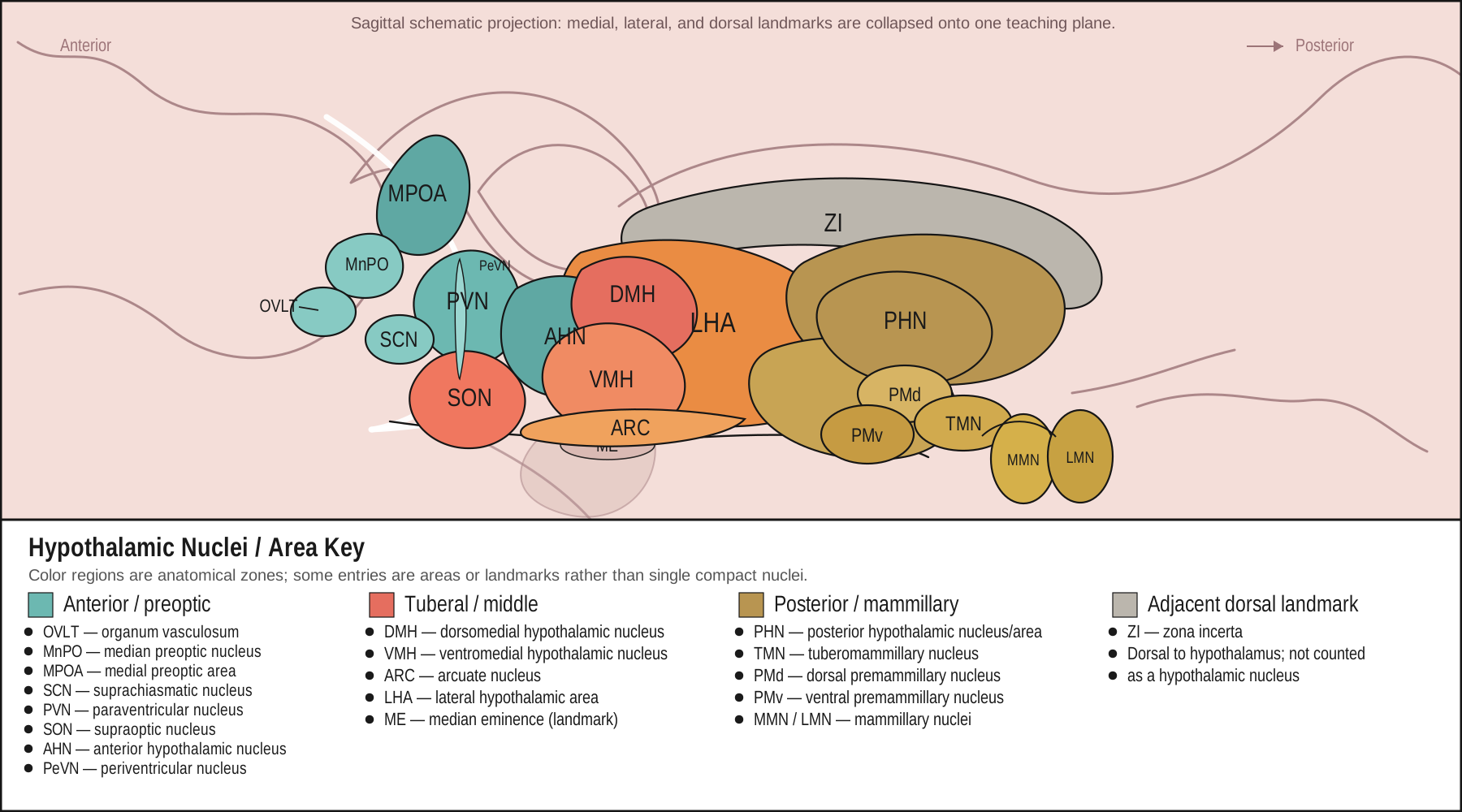
In mammals, the hypothalamus extends from the optic chiasm to the mammillary bodies, wrapping around the third ventricle. It is conventionally divided front to back into anterior, tuberal, and posterior regions, but for functional neuroscience a more useful axis runs medial to lateral, because it tracks the logic of what the tissue does.
At the medial edge, bordering the third ventricle, lies the periventricular zone. This contains small neuroendocrine cells whose axons terminate in the median eminence and release peptides that govern the anterior pituitary. It is the most direct interface between brain and endocrine system. Lateral to it lies the medial zone, home to the most sharply defined nuclei — the paraventricular (PVN), arcuate (ARC), ventromedial (VMH), and dorsomedial (DMH). These nuclei contain cells with highly specific sensing abilities — glucose detectors, osmosensors, estrogen-sensitive neurons — and equally specific outputs to autonomic centers, endocrine targets, and brainstem pattern generators. Furthest from the ventricle lies the lateral hypothalamus (LH), whose neurons are more intermingled and whose functions are correspondingly broad: arousal, appetitive motivation, behavioral activation. It is here that the orexin/hypocretin neurons sit, whose degeneration causes narcolepsy.
The named nuclei are not a panel of dedicated “centers,” each wired to one function. Each nucleus participates in multiple regulatory loops, and their functions overlap heavily. The table below summarizes the functions in which each nucleus participates centrally rather than assigning each a single function.
| Region | Nucleus | Primary roles |
|---|---|---|
| Anterior / Preoptic | Preoptic Area (POA) | The body’s primary thermoregulatory controller; also involved in parental care, sexual behavior, and the initiation of sleep. Warm- and cold-sensitive neurons adjust both autonomic and behavioral thermoregulation. |
| Suprachiasmatic Nucleus (SCN) | The master circadian clock. Direct retinal input lets day–night cycles shape metabolism, hormone release, temperature rhythm, and the sleep–wake state. | |
| Supraoptic Nucleus (SON) | Magnocellular neurons producing vasopressin and oxytocin; essential for fluid balance and lactation. | |
| Paraventricular Nucleus (PVN) | A central command node integrating stress, fluid balance, metabolism, and autonomic output. Contains both parvocellular endocrine neurons and autonomic premotor neurons. | |
| Tuberal (Middle) | Arcuate Nucleus (ARC) | Intermingled populations promoting feeding (AgRP/NPY) or satiety (POMC/CART). Integrates leptin, insulin, ghrelin, and glucose. |
| Ventromedial Hypothalamus (VMH) | Regulates satiety, aggression, sexual receptivity, and exploration. Classically a “satiety center,” now understood as a broader decision node for defensive and motivated behavior. | |
| Dorsomedial Hypothalamus (DMH) | Coordinates circadian output, stress responses, and thermogenic mechanisms such as shivering. | |
| Lateral Hypothalamus (LH) | Energizes behavior and modulates arousal. Orexin neurons here stabilize wakefulness and link metabolic state to motivational vigor. | |
| Posterior | Mammillary Bodies | Part of the Papez circuit; contribute to memory consolidation and spatial navigation. |
| Posterior Hypothalamus | Supports wakefulness, partly through histaminergic projections from the tuberomammillary nucleus. |
6.4 Reading the body: the sensory interface
To regulate the body, the hypothalamus must first read it, and it does so through three streams of information that differ in speed and in kind: direct chemical sensing of the blood, neural reports from the viscera, and privileged environmental cues.
The first stream exploits a deliberate gap in the body’s defenses. Most brain tissue is shielded from the bloodstream by the blood–brain barrier, but several small structures near the hypothalamus — the circumventricular organs (CVOs) — lack it, and their leaky capillaries let peptides, ions, and hormones reach neural tissue directly. We encountered the circumventricular organs in Section 4.4 and in Figure 4.4. Two of them, the subfornical organ (SFO) and the organum vasculosum of the lamina terminalis (OVLT), detect osmolarity, sodium, and circulating angiotensin II, and report rapidly to the median preoptic nucleus and PVN to drive thirst and vasopressin release. A third, the area postrema (AP), monitors toxins and metabolic peptides such as amylin and GLP-1; when activated it drives nausea and reduced feeding through projections to the nucleus of the solitary tract. Through the CVOs, the hypothalamus reads the chemical composition of the blood in real time.
The second stream is neural, arriving largely through the vagus nerve, as discussed in Section 4.2. Stretch receptors in the stomach, chemoreceptors in the gut, baroreceptors in the great vessels, and cardiopulmonary sensors all report to the nucleus of the solitary tract (NTS), from which parsed signals reach the PVN, DMH, and LH — letting the hypothalamus track fullness, blood pressure, visceral pain, and digestive state. This neural channel complements the slower chemical information from the CVOs.
The third stream carries selected environmental cues through privileged pathways. The SCN receives direct retinal input from melanopsin-containing ganglion cells, allowing circadian entrainment without conscious vision. The preoptic area receives ascending thermal information for anticipatory thermoregulation. Olfactory and pheromonal cues reach the hypothalamus through the medial amygdala, shaping reproductive and defensive responses. Together these systems let the hypothalamus assemble chemical, visceral, and environmental evidence into a single working estimate of what the body needs.
6.5 Acting on the body: the effector interface
Once a regulatory requirement is computed, the hypothalamus corrects it through three output channels operating on different timescales: hormones, the autonomic nervous system, and behavior.
Hormonal control is the most distinctive, and its architecture reflects an evolutionary fusion of neural and endocrine mechanisms. Though taught as two structures, the hypothalamus and pituitary work as a single unit, the hypothalamic–pituitary axis, and the hypothalamus commands the pituitary through two parallel routes. Magnocellular neurons in the PVN and SON send axons directly to the posterior pituitary, releasing vasopressin and oxytocin straight into the circulation — fast hormonal responses tuned to immediate demands like water retention and milk let-down. Parvocellular neurons release small peptides (CRH, TRH, GnRH, GHRH, somatostatin, dopamine) into the median eminence, where a portal capillary system carries them to the anterior pituitary to regulate its secretion of ACTH, TSH, LH/FSH, growth hormone, and prolactin — the slower, systemic adaptations of metabolism, growth, reproduction, and prolonged stress. Crucially, the loop closes: cortisol, thyroid hormones, and sex steroids feed back onto the hypothalamus, letting the controller monitor its own downstream effects. The hypothalamus is not a separate “mind” issuing orders to the body; it is a specialized outgrowth of the body’s own regulatory network.
Two organs that became one. Although we speak of a single “pituitary gland,” it is two embryologically distinct organs fused together, with different cell types, vascular architectures, and regulatory logics.
The posterior pituitary (neurohypophysis) is an outgrowth of the diencephalon — literal brain tissue. It contains the axon terminals of PVN and SON magnocellular neurons plus glia-like pituicytes, and no endocrine cells of its own; it is a release site for hypothalamic neurons, storing and releasing vasopressin and oxytocin. Because release is triggered by action potentials, control is tight and fast — hormone appears within seconds.
The anterior pituitary (adenohypophysis) derives from Rathke’s pouch, an invagination of oral ectoderm. It contains true endocrine cells — corticotropes, thyrotropes, gonadotropes, somatotropes, lactotropes — that synthesize and secrete ACTH, TSH, LH/FSH, GH, and prolactin under hypothalamic control. That control is indirect, exerted through the hypophyseal portal system, which delivers releasing hormones at high local concentration. The portal system is itself an evolutionary innovation: by avoiding dilution in the general circulation, it lets vanishingly small amounts of releasing hormone exert precise control.
Why two lobes? The dual structure represents the fusion of two regulatory strategies — a fast, electrically triggered neural strategy (posterior) and a slower, glandular endocrine strategy (anterior). The hypothalamus coordinates both, assigning each task to the channel suited to its timescale: immediate water retention versus long-term metabolic realignment, acute stress versus prolonged HPA activation. Downstream hormones feed back onto both hypothalamus and pituitary to adjust sensitivity and gain, allowing every major axis — stress, growth, reproduction, metabolism, lactation — to be regulated with both speed and persistence.
For corrections faster than any hormone, the hypothalamus reaches for the autonomic nervous system. Neurons in the PVN, DMH, and LH project to autonomic premotor neurons in the brainstem and spinal cord, regulating heart rate, vascular tone, digestive motility, pupil size, sweating, and shivering — physiological adjustments that take effect in seconds.
And where physiology alone cannot solve the problem, the hypothalamus commands behavior. It projects to the periaqueductal gray to release patterned actions — drinking, feeding, fleeing, grooming, parenting, mating — and modulates the motivational systems of the VTA and limbic cortex that shape the urge to act in the first place. Behavior is often the most powerful corrective of all: moving into shade defends temperature far more cheaply than sweating, and finding water solves a deficit that no amount of renal conservation can fix.
Body regulation is often imagined as background physiology: the quiet machinery that keeps temperature, water, glucose, and hormones in range while the real business of life happens somewhere else. That view badly understates the point of this unit. For an animal, and for a human being, regulation is not the background of life. It is much of life.
An ordinary day makes the scale visible. We sleep for many hours, not as a leisure activity but as a regulated state of neural, metabolic, endocrine, and immune restoration. We eat and drink to defend energy, salt, and water balance. We shop, cook, clean, store food, maintain shelter, seek warmth or cooling, avoid danger, recover from illness, care for children, care for aging relatives, seek mates, maintain social bonds, and manage stress. Even paid work can be viewed through this lens. In immediate experience it may feel like writing emails, teaching a class, caring for patients, stocking shelves, or repairing a road. But at the level of organismal regulation, work is also a way of acquiring future access to food, water, shelter, safety, medicine, social standing, mating opportunity, and support for offspring.
A crude time budget makes the point. In a contemporary U.S. time-use survey, the average person spends roughly ten hours per day in personal care, most of it sleep; a little over an hour eating and drinking; about two hours in household activities; additional time purchasing goods and services; and more time caring for household and nonhousehold members. Before counting paid work, this already approaches most of the waking and sleeping day. If paid work is counted as allostatic resource acquisition — obtaining the resources that will later buy food, shelter, safety, medical care, and family support — then the regulated body occupies still more of the day. For working parents, caregiving often continues as a secondary activity while other tasks are underway.
This arithmetic should not be taken too literally. Human categories such as “work,” “leisure,” “shopping,” and “caregiving” do not map cleanly onto biological functions. Watching television, taking a walk, talking with a friend, or playing music may be partly rest, partly social bonding, partly exploration, partly emotion regulation, and partly pleasure. The broader point is that the clean separation between “body regulation” and “real life” is artificial. Real behavior is usually multiply determined, and many activities serve several regulatory demands at once.
The time “left over” after sleep, feeding, drinking, work, safety, mating, and caregiving is not simply unregulated freedom. Exploration is itself an allostatic activity. When an animal explores, it is not just wandering. It is mapping the future: where water can be found, which foods are safe, where shelter is available, which paths are dangerous, which individuals are allies, which places are warm, exposed, crowded, or secure. Exploration identifies future affordances — opportunities for action that may later satisfy homeostatic needs before those needs become emergencies.
This is why the unit ends with exploration rather than treating it as a leftover category. A regulated body does not merely correct present errors. It samples the world so that future corrections can be faster, cheaper, and safer. The hypothalamus helps turn bodily need into action, but action also changes what the body will be able to need safely tomorrow.
6.6 Why prediction matters
The machinery described above expresses the organizing principle of the unit. Because physiological responses are slow, a purely reactive controller would oscillate — hypothermia chasing hyperthermia, dehydration chasing overhydration — and spend much of its time in the impaired troughs of those swings. Prediction is what prevents this. By acting on early cues — taste, gastric distension, ambient temperature, circadian phase, learned associations — the hypothalamus initiates correction before the internal environment has drifted far from optimal. Allostasis does not replace homeostasis; it is the mechanism that lets homeostasis work in a real environment, where the cost of waiting for certainty is paid in survival.
6.7 A note on method: what the rodent work shows
Much of what follows in this unit rests on rodent research, and it is worth being explicit about why, and about what that evidence can and cannot establish. Mice and rats share the basic architecture of the human hypothalamus while offering decisive experimental advantages: genetic manipulability, small size, rapid breeding, and compatibility with modern causal tools. Early lesion studies established coarse functional territories; modern genetic and optical methods have refined that picture into a mosaic of molecularly defined cell types, each dedicated to narrow aspects of regulation. One caveat applies throughout: a circuit demonstrated in a mouse is a strong hypothesis about the homologous human circuit, not a proven identity, and the chapters flag the places where the human evidence is thinner.
Optogenetics has transformed the study of the hypothalamus. By inserting genes for light-sensitive ion channels (opsins) into specific neuronal populations, researchers can activate or silence those neurons with millisecond precision using light delivered through an implanted fiber.
The technique’s power is its specificity. Neurons expressing AgRP, POMC, oxytocin, vasopressin, or galanin can be manipulated independently even when intermingled in the same nucleus, and projection-specific experiments can stimulate PVN axon terminals in the brainstem without touching pituitary-related outputs. This has exposed causal relationships that were previously inaccessible: AgRP activation drives immediate feeding; SFO activation evokes thirst; VMHvl activation elicits aggression; MPOA galanin activation produces parental care. The picture that emerges is not a set of crude “centers” but a precisely organized network of microcircuits — a theme the chapters return to repeatedly.
Philip Teitelbaum was one of the central figures in mid-twentieth-century behavioral neuroscience, and his work supplied much of the empirical foundation for how we understand hypothalamic regulation prior to the advent of optogenetics. Although later theorists would develop concepts such as “behavioral modes,” Teitelbaum himself did not use that vocabulary. What he provided was arguably more powerful: careful, staged behavioral analyses revealing how deeply hypothalamic circuits shape the organization of motivated behavior.
His most influential work concerned lateral hypothalamic (LH) lesions, interpreted in the 1940s and 50s as destroying a “feeding center” because lesioned rats showed aphagia and adipsia and would die without intervention. Teitelbaum went beyond presence/absence measures. By hand-feeding and hydrating the animals, he showed that they recovered ingestive behavior in progressive, identifiable stages — first swallowing but not approaching, later approaching food placed in the mouth but not reliably chewing, eventually recovering the full sequence, but often only under particular conditions of texture or palatability. This staged recovery overturned the idea of a single “hunger center.” Feeding, it showed, consists of multiple coordinated components — sensory reactivity, motor coordination, orienting, motivational activation — any of which can be selectively impaired. The LH was not simply signaling “eat”; it was enabling the entire behavioral scaffolding that makes eating possible.
Teitelbaum also helped reinterpret ventromedial (VMH) lesions, which produced hyperphagia and obesity. Rather than positing a “satiety center,” he examined the patterning of intake, changes in activity, shifts in emotional reactivity, and altered responses to food cues, and showed that VMH damage reorganized behavior broadly — affecting exploration, emotionality, and incentive responsiveness, not merely flipping off a hypothetical stop signal. Across these studies he insisted on analyzing behavior with the precision physiologists applied to neural systems: identifying the sequence of components, dissociating sensory from motor deficits, documenting how motivation interacts with environmental constraint.
Without optogenetics, calcium imaging, or cell-type–specific methods, Teitelbaum nonetheless anticipated much that was confirmed half a century later: that the hypothalamus contains intermingled populations with opposing functions, that complex behaviors depend on distributed circuits, and that no single nucleus corresponds to a discrete drive. Modern tools have validated, rather than replaced, the framework he built through meticulous behavioral science. For me, Teitelbaum’s approach offered a first clear demonstration that to understand the hypothalamus is to understand organized behavior across time, not isolated responses to stimuli.
6.8 Boxes within boxes: how this unit is organized
The chapters that follow take up the hypothalamic control systems one at a time, and each is built on the same skeleton: the adaptive problem the system evolved to solve, the sensors and signals that detect the relevant error, the hypothalamic circuits that compute the response, the effectors that carry it out, and the clinical and human relevance that shows what happens when the system fails.
There is a notorious trap in learning systems neuroscience: everything interacts with everything else. Understanding how the brain regulates feeding requires understanding the reward system that makes food appealing. Understanding the reward system, in turn, requires understanding the metabolic drives that give those rewards their value. Because the brain is heavily recurrent, there is no linear starting point — where does a loop begin?
In the first unit of this book, this circularity was handled by treating the hypothalamus itself as a monolithic “closed box”—a functional node that simply commanded bodily regulation. In this unit, that box is opened to examine the intricate nuclei, cell types, and disinhibitory circuits inside.
Keeping the focus strictly on the Regulated Body without explaining the entire brain at once requires new closed boxes. When the hypothalamus computes a physiological deficit and determines that a complex behavioral response is required, it hands the problem off to massive, distributed motivational networks in the midbrain and basal ganglia. For the purposes of this unit, structures like the ventral tegmental area and the nucleus accumbens are treated as closed boxes. Their internal dopamine transients and the mechanics of incentive salience are not yet required; what matters here are their inputs and outputs. The hypothalamus provides the input (the biological imperative to find water, warmth, or a mate), and this motivational closed box computes the behavioral output (the seeking, foraging, and navigation).
Treating the motivational machinery as a closed box allows the nine chapters that follow to trace a profound biological transformation in the very concept of what is being regulated:
- Thermoregulation, Fluid Balance, and Energy Balance: The unit begins with the immediate physics and chemistry of the body. The regulated variables here are literal and internal—core temperature, plasma osmolarity, and stored cellular fuel.
- Sleep and Circadian Rhythms, and Stress (The HPA Axis): The focus then shifts from defending immediate chemistry to defending the body against time and predicted threat. The regulated variable becomes the body’s operating mode, anticipating the metabolic costs of waking and the emergency costs of danger.
- Aggression and Defense, Reproduction, and Social and Parenting Behavior: The regulated variable then moves outside the physical boundary of the single organism. The brain is now defending a relational “margin of safety” in space, allocating an energy budget to the next generation, and actively using other bodies (mates, offspring, allies) to maintain its own physiological stability.
- Exploration: Finally, the regulatory target becomes entirely abstract. The animal explores not to fix a present deficit, but to defend future controllability—gathering the environmental affordances that will make all previous forms of regulation possible tomorrow.
In every case, the underlying logic is the same: the hypothalamus sits at the crucial junction where bodily need is converted into the imperative to act.