9 Energy Balance and Hunger
The Regulated Body
9.1 The adaptive problem: managing an energy reserve
Energy balance is different from the systems we have just considered because the regulated variable is buffered over a much longer timescale. Oxygen must be supplied continuously. Water can be conserved for a limited time, but it cannot be manufactured. Energy, by contrast, can be stored for weeks or months in adipose tissue. This storage capacity is one of the great advantages of animal life. It lets an organism survive a missed meal, a failed hunt, a winter, an infection, or a migration. But it also creates a difficult control problem: the brain must decide how much energy reserve is enough.
Too little reserve is dangerous. Starvation does not merely make an animal hungry; it forces the body to shut down costly functions. Growth slows. Reproduction is suppressed. Immune responses weaken. Exploration narrows. The animal becomes organized around obtaining food because every other biological project depends on the energy budget being restored. Too much reserve also has costs. In the wild, added mass can make movement more expensive and increase vulnerability to predation. In humans, chronically excessive adiposity strains cardiovascular, metabolic, inflammatory, and musculoskeletal systems. Energy balance is therefore not a simple problem of maximizing intake. It is a problem of maintaining enough reserve to survive uncertainty without allowing reserve itself to become a burden.
This makes energy regulation both slower and more predictive than thirst or thermoregulation. The relevant errors unfold over multiple timescales. A meal is a brief event. Digestion and absorption unfold over hours. Adipose stores reflect weeks or months of imbalance between intake and expenditure. The hypothalamus therefore has to integrate short-term signals about the current meal with long-term signals about the state of the body as a whole. It must answer several questions at once: Is food available? Is the stomach empty? Are nutrients arriving in the gut? How much fat is stored? Should energy be spent on heat, movement, growth, and reproduction, or should it be conserved?
As with temperature and fluid balance, waiting for certainty would be a poor strategy. A controller that waited until cellular fuel stores were dangerously depleted before initiating feeding would leave the animal weak at the moment action was required. A controller that waited until calories had been fully absorbed before terminating a meal would overshoot, especially in environments where food is energy dense. Energy balance therefore depends on allostasis. The brain uses taste, smell, learned food cues, gastric distension, gut peptides, circulating hormones, and adiposity signals to estimate what the body’s future energy state will be, not merely what it is at the present instant.
9.2 Sensors and signals: reserves, meals, and predicted calories
Energy balance is regulated through several streams of information. Some report the long-term reserve stored in adipose tissue. Others report the current state of the stomach and intestine. Still others report nutrients in the blood or learned cues in the environment. The hypothalamus does not treat these signals as equivalent. Long-term adiposity signals set the background gain of the system; short-term meal signals control the initiation and termination of feeding; learned sensory cues allow the animal to predict future calories before they have entered the body at all.
9.2.1 Long-term adiposity signals: leptin and insulin
The most important long-term signal is leptin, a hormone secreted primarily by adipocytes. As fat mass rises, leptin levels rise. As fat mass falls, leptin levels fall. In this sense leptin gives the brain a running estimate of stored energy. But leptin is not best understood as a simple satiety hormone whose job is to stop a meal. Its most powerful signal is the absence of adequate reserve. Low leptin is read by the brain as a starvation warning. It increases hunger, lowers energy expenditure, suppresses reproductive function, and shifts physiology toward conservation.
This asymmetry is important. The energy-balance system is much better at defending against weight loss than at defending against weight gain. From an evolutionary perspective this makes sense. For most animals, starvation was the more immediate threat. A falling leptin signal therefore triggers a coordinated emergency program: eat more, spend less, delay reproduction, and use the available energy for survival. High leptin can restrain intake and permit expenditure, growth, and reproduction, but the response often saturates. Once fat stores are abundant, more leptin does not necessarily produce proportionally stronger satiety.
Insulin provides a second long-term signal. It is usually introduced as the hormone that controls blood glucose, but it also acts in the brain. Circulating insulin tends to track nutritional state and visceral adiposity, and insulin receptors in the hypothalamus and brainstem allow it to influence feeding and energy expenditure. Together, leptin and insulin help the brain estimate whether the body is operating from abundance or scarcity.
9.2.2 Short-term meal signals: ghrelin, distension, and gut peptides
The current meal is reported through a different set of signals. The clearest hunger-promoting hormone is ghrelin, secreted mainly by the empty stomach. Ghrelin rises before anticipated meals, activates receptors on arcuate hunger circuits, and increases the probability that the animal will seek and consume food. It is a pre-meal signal, not simply a passive marker of emptiness. Its timing can be learned, which means that the brain can begin preparing for food at the expected hour even before nutrients have arrived.
Once eating begins, the gastrointestinal tract produces a cascade of satiety signals. Stomach distension is reported mechanically through vagal afferents. Nutrients in the intestine trigger enteroendocrine cells to release peptides such as cholecystokinin (CCK), peptide YY (PYY), and glucagon-like peptide 1 (GLP-1). These signals reach the brain through vagal pathways to the nucleus of the solitary tract (NTS) and area postrema, and some also act hormonally. Their job is not to measure total body fat. Their job is to shape the meal now in progress: slow gastric emptying, reduce meal size, and signal that calories are on the way.
This separation of timescales is essential. Leptin tells the brain whether the long-term reserve is adequate. Ghrelin helps initiate a meal. Gut peptides and vagal signals help terminate it. None of these signals alone is the complete answer to hunger. Energy regulation emerges from their combination.
9.2.3 Nutrient and glucose signals
The brain also monitors fuels more directly. Glucose-sensitive neurons in the hypothalamus and brainstem respond to changes in local glucose availability. The liver and hepatic portal system report absorbed nutrients through vagal and spinal afferents. The area postrema, which lacks a conventional blood-brain barrier, is positioned to detect circulating metabolic peptides and toxins. These signals are especially important when the internal state changes rapidly, as during fasting, exercise, illness, or after a meal rich in carbohydrate.
The key teaching point is that energy sensing is not confined to one organ or one molecule. Adipose tissue, stomach, intestine, pancreas, liver, blood, and brain all contribute evidence. The hypothalamus receives this evidence partly through direct hormonal access, partly through the NTS and vagus, and partly through local nutrient-sensitive neurons. It then uses that evidence to regulate not only whether the animal eats, but how much energy the body is willing to spend.
9.2.4 Food cues as predictive signals
Food itself is also a signal. Sight, smell, taste, texture, and learned context can all predict incoming calories before digestion begins. A kitchen smell, the sight of a familiar food, or the time of day can trigger cephalic-phase responses: salivation, insulin release, digestive preparation, and changes in hypothalamic activity. These responses are not errors being corrected. They are predictions being prepared for.
Modern recordings from hypothalamic feeding circuits make this predictive logic concrete. In a hungry animal, AgRP neurons are active during food seeking. Yet their activity can fall rapidly when food is seen, smelled, or tasted, well before the nutrients have entered the bloodstream. This early inhibition does not mean the energy deficit has been corrected. It means the controller has evidence that correction is likely. The same logic appeared in thirst, where drinking silences thirst neurons before water has been absorbed. Here, food cues begin to silence hunger circuitry before calories have been digested.
9.3 Hypothalamic circuits: the arcuate melanocortin controller
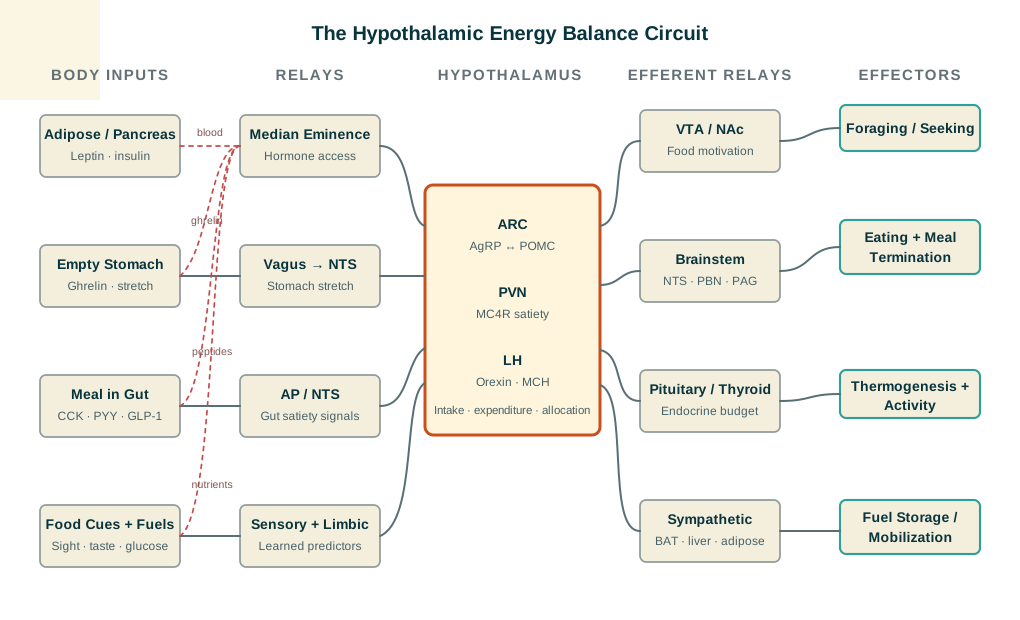
The core hypothalamic circuit for energy balance lies in the arcuate nucleus (ARC), a medial hypothalamic structure at the base of the third ventricle near the median eminence. This location matters. The ARC sits at a privileged interface between brain and blood, making it well positioned to sample circulating hormones such as leptin, insulin, and ghrelin. It is not the entire hunger system, but it is the best entry point for understanding the logic of hypothalamic energy control.
The ARC contains two intermingled populations that form an opponent circuit. One population promotes hunger and energy conservation. The other promotes satiety and energy expenditure. The old language of a “feeding center” and a “satiety center” is too simple, but the underlying insight was not wrong: energy regulation depends on opposing forces that must be balanced cleanly. The modern version of that idea is the melanocortin system, built around AgRP/NPY/GABA neurons, POMC/CART neurons, and melanocortin receptors in downstream targets such as the PVN.

9.3.1 AgRP/NPY/GABA neurons: active hunger
The hunger-promoting population expresses Agouti-related peptide (AgRP), neuropeptide Y (NPY), and GABA. These neurons are activated by ghrelin and inhibited by leptin, insulin, and nutrient-related satiety signals. When active, they do not simply report that the animal has not eaten. They generate an active motivational state that organizes the animal around food seeking.
AgRP neurons act through several mechanisms. NPY is a powerful orexigenic peptide. GABA provides fast inhibition of downstream satiety and anorexigenic targets. AgRP itself acts at melanocortin receptors, especially MC4 receptors, opposing the action of α-MSH released by POMC neurons. The result is both direct promotion of feeding and removal of satiety restraint. In circuit terms, AgRP neurons are not merely pressing the accelerator. They also release brakes imposed by downstream satiety pathways.
This is why AgRP neurons are so useful pedagogically. Their activity illustrates the difference between hunger as a passive absence and hunger as an active neural computation. A hungry animal is not simply lacking a satiety signal. It is in a brain state that increases the value of food, promotes search, and suppresses competing expenditures.
9.3.2 POMC/CART neurons: melanocortin satiety and expenditure
The opposing arcuate population expresses pro-opiomelanocortin (POMC) and CART. POMC is a precursor peptide that can be processed into α-MSH. α-MSH activates melanocortin receptors, especially MC4 receptors, in the PVN and other targets. This melanocortin signal suppresses food intake and promotes energy expenditure.
POMC neurons are often called “satiety neurons,” but that phrase needs caution. Their effects are generally broader and slower than a simple stop-eating reflex. They help bias the system toward a state in which food is less urgent, sympathetic tone and thermogenesis can increase, and energy can be allocated to functions other than immediate intake. Leptin and insulin tend to support this state; low leptin removes that support and shifts the balance back toward hunger and conservation.
The opposition between AgRP and POMC is therefore not a simple on/off switch. It is a gain-control system. When reserves are low, AgRP tone rises and melanocortin signaling falls. Feeding becomes more likely, energy expenditure is suppressed, and the animal becomes more food-focused. When reserves are adequate and meal-related satiety signals are present, melanocortin signaling gains influence. Intake declines, expenditure can rise, and the body becomes willing to spend energy on growth, reproduction, thermogenesis, and exploration.
9.3.3 PVN, LH, and downstream targets
The arcuate circuit influences behavior and physiology through several downstream nodes. The paraventricular nucleus (PVN) is a major target of melanocortin signaling. MC4 receptor activation in PVN neurons suppresses feeding and supports autonomic and endocrine programs that increase energy expenditure. The PVN also connects energy state to the thyroid axis, stress axis, and sympathetic outflow. It is therefore not merely a satiety relay; it is a node where energy state is translated into endocrine and autonomic allocation.
The lateral hypothalamus (LH) contributes a different part of the response. Historically, LH lesions produced aphagia and adipsia, which led to the idea of a feeding center. Modern work gives a more nuanced picture. The LH contains intermingled populations, including orexin/hypocretin neurons, MCH neurons, and multiple glutamatergic and GABAergic cell types. These neurons influence arousal, reward, locomotion, foraging, and the willingness to work for food. Orexin is especially important because it links metabolic state to wakefulness and behavioral vigor; as discussed in Chapter 10, an animal that needs food must also stay awake enough to find it.
The circuit also extends beyond the hypothalamus. Brainstem nuclei such as the NTS and parabrachial nucleus carry gut-derived satiety and visceral malaise signals. The ventral tegmental area, nucleus accumbens, amygdala, hippocampus, and prefrontal cortex allow energy state to shape reward, memory, and decision making. The hypothalamus supplies the bodily urgency, but food seeking is organized by a distributed network that remembers where food was found, evaluates whether it is worth pursuing, and selects the appropriate behavior.
9.3.4 Causal evidence
Modern causal methods have made the arcuate circuit one of the clearest examples of a molecularly defined hypothalamic control system. Selective activation of AgRP neurons can trigger rapid feeding even in animals that have recently eaten. The effect is not a vague increase in arousal. It is organized around food. Conversely, ablation of AgRP neurons in adult mice can produce profound anorexia, severe weight loss, and death unless downstream consequences are rescued. This shows that hunger is an actively generated state, not merely the absence of fullness.
Recordings from AgRP neurons add the predictive dimension. Their firing is high during hunger, but it can drop rapidly when food becomes available, before nutrient absorption has occurred. The size and persistence of this drop depend on the predicted caloric value of the food. A cue that reliably forecasts calories has a stronger effect than a cue that does not. This is allostasis at the cellular level: the neuron changes its activity according to the expected future state of the body.
Causal evidence for POMC neurons is also strong, but it has a different temporal character. Activating melanocortin pathways can reduce feeding and increase expenditure, and loss of melanocortin signaling — especially MC4 receptor function — produces severe hyperphagia and obesity. But the POMC side is not simply the mirror image of AgRP. AgRP activation can initiate feeding quickly; melanocortin satiety and expenditure are often expressed over a broader and somewhat slower time window. This asymmetry is itself instructive. In a dangerous environment, rapid hunger may be needed to mobilize action, while satiety and energy expenditure can be adjusted more gradually.
Taken together, the evidence supports a specific control architecture. The ARC reads long-term and short-term metabolic signals, AgRP neurons actively generate hunger and disinhibit feeding pathways, POMC neurons promote melanocortin satiety and expenditure, and downstream hypothalamic, brainstem, and limbic circuits convert this balance into behavior and physiology.
Early lesion studies seemed to divide the hypothalamus into simple centers. Damage to the lateral hypothalamus produced aphagia and adipsia, suggesting a “feeding center.” Damage to the ventromedial hypothalamus produced hyperphagia and obesity, suggesting a “satiety center.” These findings were important, but the interpretation was too simple.
The problem is that lesions damage many cell types and fibers of passage at once. A rat with a lateral hypothalamic lesion may fail to eat not because a single hunger command has been erased, but because orienting, arousal, sensory reactivity, motor sequencing, and motivational vigor have all been disrupted. Similarly, ventromedial damage changes more than satiety. It alters activity, autonomic output, endocrine state, emotional reactivity, and sensitivity to environmental cues.
Modern circuit methods did not make the classical work irrelevant. They explained why it was powerful but incomplete. The hypothalamus does contain nodes that are crucial for feeding and satiety, but those nodes participate in distributed loops. The lesson is the same one introduced in the unit overview: hypothalamic nuclei should be read as regulatory participants, not isolated centers.
9.4 The Affective and Behavioral Drive
Physiological energy conservation can delay starvation, but it cannot solve the problem. At some point the animal must find food. Hunger is therefore not only a metabolic signal. It is an affective and motivational state that changes what the world means.
When energy is low, food cues become more salient. Smells are more compelling, tastes are more rewarding, and the animal is more willing to work, explore, and take risks to obtain calories. This is another form of alliesthesia: the value of a stimulus depends on the internal state of the body. The same food that seems uninteresting after a large meal can become intensely attractive after a fast. The sensory object has not changed. The body has changed, and the brain has revalued the object accordingly.
The lateral hypothalamus is one of the major bridges between metabolic need and motivated action. Through connections with the VTA, nucleus accumbens, amygdala, and prefrontal cortex, hypothalamic state can alter reward learning and incentive salience. This is why food seeking cannot be reduced to a reflex arc. The animal must remember where food is likely to be, evaluate the cost of obtaining it, choose among available options, and interrupt other behaviors. Energy state biases all of these computations.
This motivational architecture is adaptive in a variable environment. If food is scarce, hunger should narrow attention and make food unusually valuable. If food is available but monotonous, sensory-specific satiety encourages variety: after eating one food to satiety, a new taste may remain appealing. In the wild, this helps diversify nutrient intake. In a modern environment of abundant, highly palatable, energy-dense foods, the same mechanism can promote overeating. The problem is not that the hypothalamus has stopped regulating. It is that an ancient predictive system is operating in an environment whose cues no longer reliably predict the biological consequences they once did.
9.5 Effectors: intake, expenditure, and energy allocation
The energy-balance system regulates both sides of the energy equation. It controls intake, by changing the probability of seeking and consuming food, and expenditure, by changing how much energy the body is willing to spend. It also controls allocation: whether energy is directed toward heat, movement, growth, reproduction, immune defense, or storage.
The most obvious effector is feeding behavior. AgRP, LH, brainstem, and limbic circuits increase food seeking, approach, chewing, swallowing, and meal persistence. Gut-derived satiety signals and melanocortin pathways help terminate meals. This behavioral arm is the definitive correction because calories, like water, must ultimately come from outside the body.
The autonomic nervous system provides a second arm. Sympathetic output can increase thermogenesis in brown adipose tissue and influence white adipose tissue lipolysis. Autonomic pathways also regulate liver glucose production, pancreatic hormone release, gastrointestinal motility, and nutrient handling. These responses allow the brain to adjust not only how much energy enters the body, but how quickly stored fuel is mobilized or conserved.
Endocrine allocation provides a slower but equally important arm. When leptin is low and the brain reads the body as energy-depleted, thyroid output and reproductive function can be suppressed, lowering expenditure and delaying costly biological projects. During energy abundance, these systems are permitted to operate at higher levels. This is why energy balance sits beneath many later topics in the unit. Stress, reproduction, sleep, exploration, and immune defense all depend on whether the body can afford them.
The system also changes behavior more broadly. Hunger increases arousal, foraging, and willingness to work for food. Satiety permits rest, digestion, social behavior, and exploration that is not immediately food-directed. The hypothalamus is therefore not merely adjusting calories. It is regulating the animal’s behavioral mode according to the energy budget.
9.6 Clinical failures and modern relevance
Clinical disorders of energy balance expose the architecture by breaking different parts of the loop.
Rare forms of genetic obesity show the power of the leptin-melanocortin pathway. Congenital leptin deficiency produces intense hunger and severe early-onset obesity, and leptin replacement can dramatically reduce intake in those rare patients. More commonly, obesity is not caused by a lack of leptin. Many individuals with obesity have high circulating leptin because they have abundant adipose tissue. The problem is that the brain does not respond to that signal adequately — a state often described as leptin resistance. From the controller’s perspective, the reserve signal is partly unavailable, so conservation and hunger can persist despite excess stored energy.
Disruption downstream of leptin can produce a similar phenotype. Loss-of-function variants affecting the melanocortin pathway, especially MC4 receptor signaling, can cause severe hyperphagia and obesity. These cases are pedagogically important because they show that body weight is not governed by willpower alone. A molecular pathway linking ARC, PVN, autonomic output, and motivated behavior can shift the defended level of intake and expenditure.
Prader-Willi syndrome illustrates a broader hypothalamic failure. The syndrome, caused by loss of expression of paternally derived genes in the 15q11-q13 region, includes hypotonia, endocrine abnormalities, and later a powerful hyperphagic drive. Food seeking can become relentless enough that access must be externally controlled. The point is not simply that patients are “very hungry.” The normal integration of satiety, endocrine state, and behavioral restraint is disrupted.
At the other extreme, anorexia nervosa shows that hypothalamic hunger signals do not automatically determine behavior. Starvation produces powerful metabolic signals to eat, yet food avoidance can persist. This does not mean the hypothalamus is irrelevant. It means that hunger circuits are embedded in wider systems for anxiety, habit, body representation, social meaning, and cognitive control. In some patients, restriction may become linked to relief from anxiety or to reinforcement through habit and control. The disorder therefore reveals a limit of simple homeostatic thinking: a biological drive can be overridden, reshaped, or recruited by higher-order motivational systems.
A final modern example comes from GLP-1 signaling. GLP-1 is part of the normal gut-brain satiety system, acting through the vagus, NTS, area postrema, hypothalamus, and reward-related circuits to reduce intake and slow gastric emptying. GLP-1 receptor agonists exploit this pathway pharmacologically. Their effects are not magic and not merely cosmetic; they demonstrate that meal size, appetite, nausea, reward, and metabolic state can be shifted by acting on the same gut-brain-hypothalamic networks that normally terminate a meal. They also remind us that energy balance is a distributed control system, not a moral trait.
These examples break different pieces of the loop. Leptin deficiency and leptin resistance alter the long-term reserve signal. MC4 receptor dysfunction alters melanocortin output. Prader-Willi syndrome disrupts hypothalamic and endocrine integration. Anorexia nervosa shows that hunger is embedded in broader affective and cognitive systems. GLP-1 pharmacology demonstrates that gut-derived satiety can be amplified. Each case makes the same point: the defended level of intake and expenditure is computed by neural and endocrine circuits, not chosen freely at each meal.
9.7 Integration: energy balance as predictive control
Energy balance is the longest-horizon example of hypothalamic regulation in this unit. Temperature can drift in minutes. Plasma osmolarity can become dangerous over hours. Energy reserve is defended over days, weeks, and months. Yet the control logic is familiar. Early cues are privileged because late feedback is too slow. Hunger can rise before a meal, and AgRP activity can fall when food is merely detected. Gut peptides can terminate a meal before absorbed calories have fully restored fuel availability. Leptin and insulin adjust the background gain of the system according to stored reserve.
The hypothalamus solves this problem by linking body state to behavioral priority. The ARC reads metabolic hormones and nutrients. The PVN translates melanocortin state into endocrine and autonomic allocation. The LH connects energy need to arousal, reward, and foraging. Brainstem circuits report the meal in progress. Limbic and cortical systems use memory, context, and value to decide how hard the animal should work for food.
Energy balance therefore cannot be reduced to a calorie ledger inside the body. It is an allostatic control system that estimates future need, assigns value to food, adjusts expenditure, and reallocates the organism’s priorities. The same system that drives a hungry animal to forage also suppresses reproduction during famine, modulates sleep and arousal, and gates exploration according to available resources. Energy is the budget from which every other regulatory system spends.