10 Sleep and Circadian Rhythms
The Hypothalamus and the Regulated Body
10.1 The adaptive problem: timing repair before failure
Sleep is easy to recognize and surprisingly hard to define. In mammals and birds it has a distinctive physiology: characteristic EEG patterns, reduced muscle tone, reduced responsiveness to the outside world, and organized cycling between NREM and REM states. But if we define sleep only by the mammalian EEG, we miss the deeper biological phenomenon. Many animals show recurring periods of behavioral quiescence linked to the light–dark cycle. They stop moving, interact less with the environment, become harder to arouse, and, if kept awake, compensate later with rebound sleep. By those behavioral criteria, sleep-like states appear not only in mammals and birds, but also in fish, insects, and even simpler nervous systems.
That breadth matters. Sleep is not a cultural habit, a luxury, or simply a failure of wakefulness. It is an ancient regulated state. The forms vary across species. Humans and other large mammals can often sleep in long consolidated bouts. Many prey animals sleep more briefly and more fragmentedly, because deep unresponsive sleep is dangerous. Dolphins and some migratory birds can sleep one hemisphere at a time, maintaining enough sensory and motor control to keep swimming or flying. The common theme is not a single posture or a single EEG pattern. The common theme is regulated withdrawal from the world.
That withdrawal creates the adaptive problem. Wakefulness is biologically valuable because it is the state in which animals search, eat, mate, defend, learn, parent, and explore. But wakefulness is expensive. Neural activity consumes energy. Synapses change with experience. Extracellular metabolites accumulate. Arousal systems keep the cortex responsive, the body prepared for action, and the animal available to environmental demands. A brain that remained awake indefinitely would not simply become tired in the ordinary sense. It would become metabolically, computationally, immunologically, and emotionally unstable.
The obvious solution is to sleep. The problem is that sleep itself carries costs. During sleep, sensory thresholds rise and action is suppressed. The animal is less able to detect a predator, defend itself, find food, avoid cold, or respond to social opportunity. Sleep therefore has to be timed. It must occur before the costs of wakefulness become disabling, but not when the costs of unresponsiveness would be greater. This is why sleep belongs in a unit on hypothalamic regulation. It is not only a state of the brain. It is a daily reorganization of the whole body around a predicted schedule of activity and repair.
Several ideas help explain why sleep is necessary. One is metabolic clearance. During wakefulness, neural activity produces waste products and extracellular signals that must be cleared from the tissue. Work on the glymphatic system has suggested that cerebrospinal fluid and interstitial fluid exchange more effectively during sleep, helping remove soluble molecules such as beta-amyloid. This does not mean that sleep has only one function, or that glymphatic clearance is the final answer to the question of why we sleep. It does mean that sleep can be understood as a regulated state in which the brain changes its fluid, vascular, and glial conditions to perform maintenance that is less compatible with active waking.
A second idea is synaptic renormalization. Wakefulness is a period of learning. Learning changes synapses, and a waking day may leave the brain with a net increase in synaptic strength. That is useful, but it is also costly. Stronger and larger synapses require space, energy, vesicles, receptors, membrane, mitochondria, and protein synthesis. If every day simply added more synaptic weight, the system would eventually saturate. Sleep may provide an offline state in which synapses can be downscaled selectively: preserving important structure while restoring the capacity for new learning.
A third idea is memory consolidation. Sleep is not merely cleanup. It also provides patterned neural activity in which recently acquired information can be replayed, redistributed, weakened, strengthened, or integrated with older knowledge. Slow-wave sleep, sleep spindles, hippocampal sharp-wave ripples, and REM-associated cortical activation all provide different opportunities for the brain to process information when it is partially disconnected from new sensory demands.
The chapter should not pretend that these hypotheses have been reduced to a single final function. Sleep almost certainly serves multiple functions, and those functions may differ across species, developmental stages, and sleep states. For our purposes, however, the crucial point is simpler: sleep is a regulated maintenance state whose timing must be controlled. Waiting until the brain is already failing would be too late. A student who becomes sleepy only after attention collapses has already paid the cost. An animal that sleeps only after exhaustion has already lost the ability to choose a safe place. The system needs prediction.
That prediction has two major components. One is a daily clock that estimates where the organism is in the solar cycle. The other is a homeostatic pressure that estimates the accumulated cost of wakefulness. Sleep timing emerges from their interaction. This is the two-process model: a circadian process that predicts the right phase of the day, and a homeostatic process that measures how long the organism has been awake. In this chapter, we will use that model as an entry point into the hypothalamic circuits that turn time, fatigue, light, hunger, danger, and habit into the daily alternation between sleep and wakefulness.
10.2 Sensors and signals: light, sleep pressure, and body state
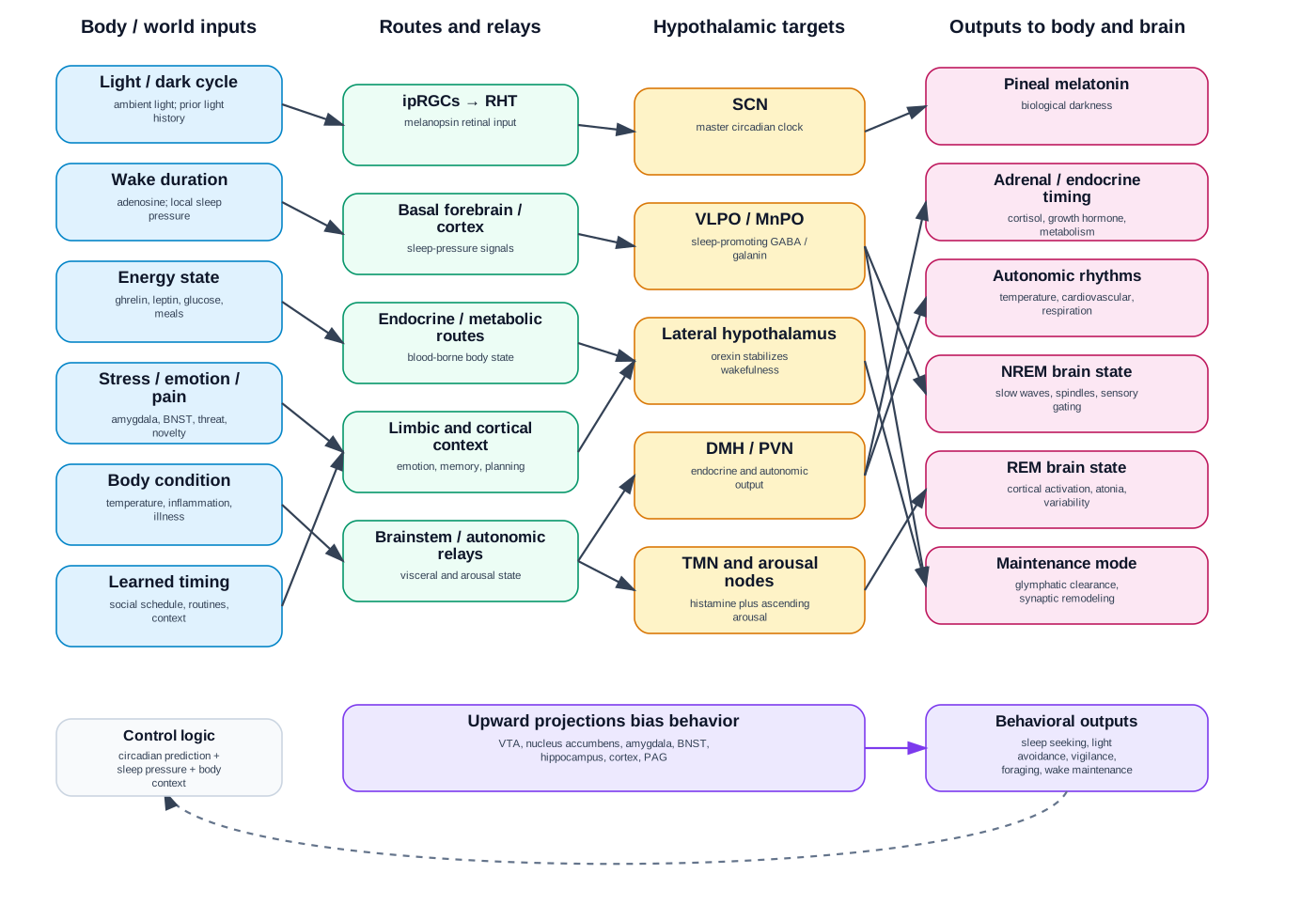
Sleep and circadian rhythm depend on several classes of signals. Some come from the outside world, especially light. Some come from the brain itself, reflecting the metabolic and synaptic cost of time spent awake. Some come from the body: feeding state, body temperature, stress hormones, inflammation, pain, and the social schedule imposed by the animal’s niche. These signals do not all mean the same thing. Light tells the brain what time the world is likely to be. Sleep pressure tells the brain what wakefulness has cost. Body-state and learned cues tell the brain whether sleep is safe, useful, or temporarily unaffordable.
10.2.1 Process C: the circadian clock
The circadian component is Process C. It is a roughly 24-hour rhythm that continues even when the external light–dark cycle is removed. Humans placed in constant conditions do not become arrhythmic immediately; their sleep, temperature, hormone secretion, and alertness continue to drift according to an internal period that is close to, but not exactly, 24 hours. That small mismatch is important. A clock that runs a little long or short must be reset each day, or it will drift out of alignment with the world.
The dominant resetting signal is light. But the pathway that entrains the circadian system is not simply the pathway for seeing objects. A specialized class of retinal ganglion cells contains the photopigment melanopsin. These intrinsically photosensitive retinal ganglion cells are especially useful for measuring ambient illumination. Their axons travel through the retinohypothalamic tract to the suprachiasmatic nucleus (SCN) of the hypothalamus. The SCN sits just above the optic chiasm, exactly where its name says it does, and it is the master circadian clock of mammals.
This pathway gives light a privileged status. A flash of light at the right circadian phase can shift the clock. Morning light tends to advance the rhythm, making the body move earlier. Evening light tends to delay it, making the body move later. Light is therefore not merely visual information. It is a biological time-setting signal. The modern problem of bright evening light, especially short-wavelength light that strongly stimulates melanopsin-containing retinal ganglion cells, is a problem of control: the brain receives evidence that the day is still present when the social clock says night has arrived.
The SCN uses light to align an internal molecular clock. At the cellular level, clock genes and their protein products form delayed feedback loops. Some gene products promote the expression of others; later, accumulated proteins inhibit the transcriptional machinery that produced them. This delay creates a self-sustaining rhythm. Individual SCN neurons can oscillate, but the master clock is not a single cell. It is a synchronized network whose neurons keep one another in phase and then coordinate clocks throughout the rest of the brain and body.
One output of this system is melatonin, but melatonin needs to be understood carefully. It is often marketed as a sleep aid, and it can increase drowsiness in humans, but its deeper role is to signal biological darkness. In nocturnal animals, biological darkness may be a cue for activity rather than sleep. Melatonin therefore does not mean simply “go to sleep.” It means that the body has entered the night phase of its internal schedule. The same signal can have different behavioral consequences depending on the species and on the rest of the circuit.
The melatonin pathway is circuitous but useful to know because it shows how a hypothalamic clock controls an endocrine output. The SCN influences the paraventricular nucleus (PVN), which projects to sympathetic preganglionic neurons in the spinal cord. Those neurons influence the superior cervical ganglion, which projects to the pineal gland. In darkness, this pathway permits melatonin secretion. In light, melatonin is suppressed. The important teaching point is that the retina does not simply tell the cortex what is visible. It tells the hypothalamus what time the body should become.
10.2.2 Process S: the homeostatic hourglass
The second component is Process S, the homeostatic sleep process. If Process C is a clock, Process S is an hourglass. It rises during wakefulness and falls during sleep. The longer an animal remains awake, the greater the sleep pressure; the longer and deeper it sleeps, the more that pressure dissipates. This is why sleep deprivation produces rebound sleep. The system does not merely resume its normal schedule after a missed night. It compensates.
Adenosine is the clearest teaching example of a sleep-pressure signal. ATP is continually used by active cells, and adenosine is one of the metabolic products that accumulates as energy is spent. In the waking brain, extracellular adenosine rises in several regions, including the basal forebrain. Adenosine acts through receptors that reduce the activity of wake-promoting systems and make sleep more likely. Caffeine promotes wakefulness largely because it blocks adenosine receptors. It does not erase sleep pressure; it masks part of the signal. When caffeine wears off, the accumulated pressure remains.
This is why the timing of caffeine matters. A cup of coffee at noon is not gone by dinner. Caffeine metabolism varies among individuals, but a common half-life estimate is several hours. A dose taken in the afternoon or early evening can still antagonize adenosine receptors when the circadian system is trying to open the gate for sleep. The person may feel that they are not sleepy, but the underlying homeostatic cost has not disappeared. Arousal has been pharmacologically defended against the signal.
Adenosine is not the only possible contributor to Process S. Sleep pressure is local as well as global; heavily used cortical regions can show stronger slow-wave activity during subsequent sleep. Cytokines, prostaglandins, nitric oxide, and other neuromodulatory signals also participate in sleep regulation, especially during illness. But adenosine provides the cleanest example of the principle. The brain contains chemical evidence that waking activity has been costly, and that evidence helps shift the system toward sleep.
10.2.3 Body-state and predictive cues
Sleep timing is also shaped by the rest of the body. Hunger can delay sleep. A falling energy budget activates arousal and foraging systems, including lateral hypothalamic orexin neurons. Ghrelin, a pre-meal signal from the stomach, can promote wakefulness as part of food seeking. Leptin and glucose, which signal energy availability, can reduce the need to remain activated. This is one reason sleep and energy balance are so tightly coupled. An animal that needs food must be awake enough to find it; an animal that has eaten can afford the regulatory mode of rest, digestion, and repair.
Stress and emotion also bias the sleep-wake system. A frightening environment, social conflict, novelty, pain, or anticipated threat can keep arousal systems engaged even when Process S is high and the circadian phase is favorable for sleep. This is adaptive in the short run. It would be disastrous for an animal to fall asleep simply because adenosine has accumulated while a predator is nearby. But the same architecture can become maladaptive when psychological threat, worry, or chronic stress repeatedly prevents disengagement from waking vigilance.
Temperature is another cue. Sleep is usually favored by a fall in core body temperature and by conditions that permit heat loss. Warmth can encourage sleep when it signals safety and thermal comfort, but heat stress can fragment sleep. Illness changes sleep as well. Inflammatory signals can increase sleepiness, alter sleep architecture, and shift the body’s allocation of energy toward immune defense. The point is not that each signal has a fixed sleep or wake meaning. The point is that the hypothalamus integrates them according to state. Light, time awake, hunger, temperature, stress, pain, inflammation, and learned routines all become evidence in a control problem: should the organism remain engaged with the world, or enter the protected maintenance state of sleep?
10.3 Hypothalamic circuits: the clock, the switch, and the stabilizer
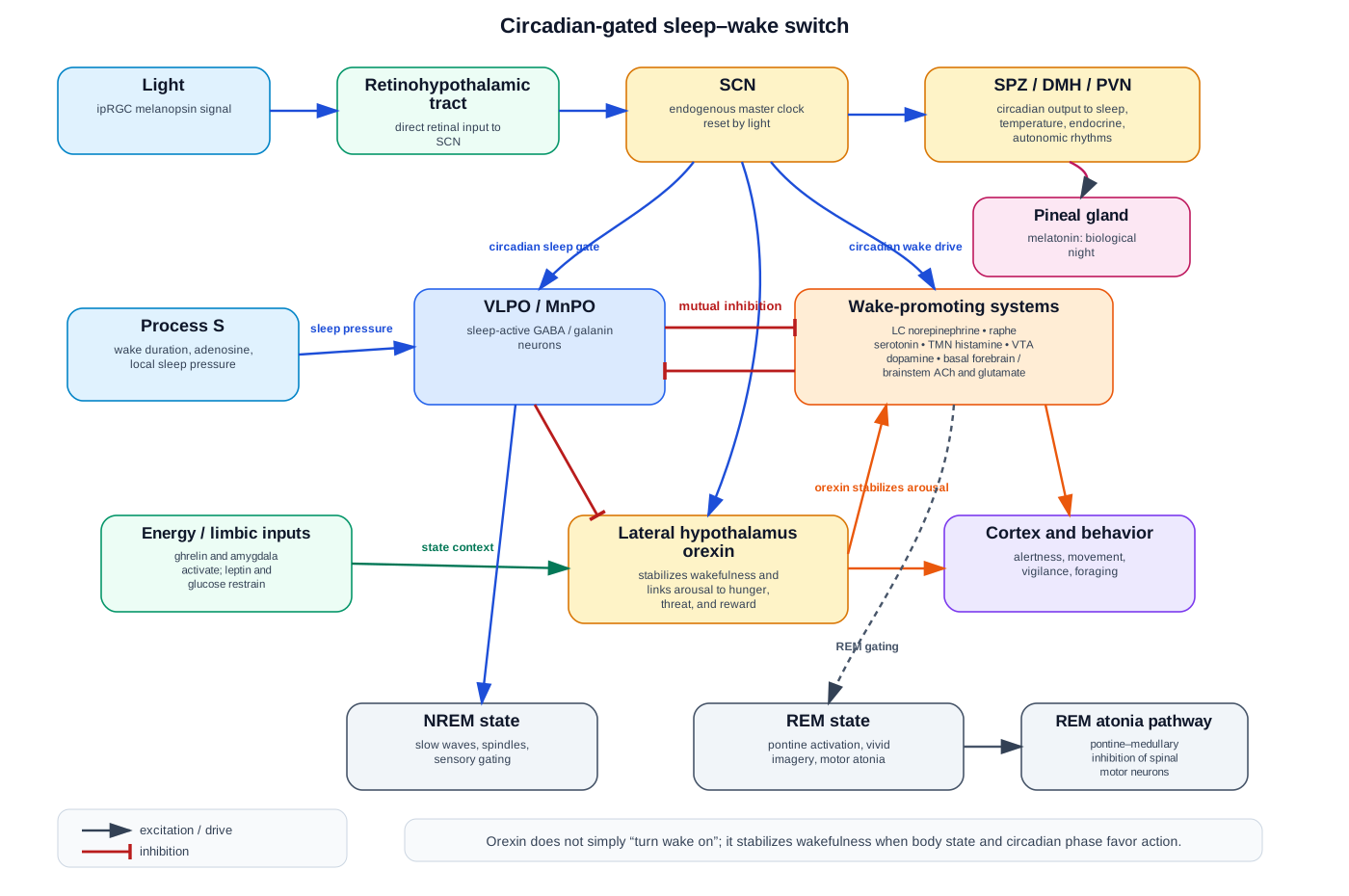
The two-process model describes the signals that organize sleep timing. The next step is circuit logic. How does the brain turn circadian phase and sleep pressure into a stable sleep or wake state? The answer is not a single sleep center. It is a set of interacting hypothalamic, brainstem, basal forebrain, thalamic, and cortical circuits that mutually reinforce one state while suppressing the other.
10.3.1 The SCN: a clock that coordinates the body
The suprachiasmatic nucleus is the central circadian pacemaker. Lesions of the SCN in animals disrupt daily rhythms of activity, feeding, drinking, body temperature, hormone secretion, and sleep timing. Transplantation and molecular studies show that the SCN is not merely a relay for light. It contains an endogenous oscillator. Light resets the oscillator; it does not create it from scratch each morning.
The SCN coordinates the body through several output routes. Some outputs pass through the subparaventricular zone and dorsomedial hypothalamus (DMH), which help translate circadian phase into rhythms of sleep-wake propensity, locomotor activity, feeding, and body temperature. Some outputs influence the PVN and autonomic pathways, shaping melatonin secretion, adrenal rhythms, cardiovascular state, and other endocrine/autonomic patterns. Some outputs influence the lateral hypothalamus, biasing orexin-mediated arousal according to time of day.
This distributed output is important because the SCN does more than say “sleep now.” It prepares the body for the expected phase of the day. In humans, core temperature tends to fall during the biological night and rise before waking. Cortisol begins to rise before habitual awakening. Alertness, digestive readiness, autonomic tone, and metabolic hormones all show circadian organization. These rhythms are not reactions to errors that have already occurred. They are predictions about the demands likely to arrive next.
10.3.2 The wake system: arousal as an active state
Wakefulness is also an active state. Early work by Moruzzi and Magoun showed that the ascending reticular activating system was required for cortical arousal. Stimulation of brainstem arousal systems could wake an animal; lesions could produce profound sleepiness or coma-like unresponsiveness. That historical work established a principle that remains central: the waking cortex depends on ascending neuromodulatory and glutamatergic systems that hold it in a responsive state.
Several populations contribute to this wake-promoting network. The locus coeruleus provides norepinephrine. The dorsal raphe provides serotonin. Cholinergic neurons in the pedunculopontine and laterodorsal tegmental nuclei, as well as the basal forebrain, promote cortical activation. Dopamine neurons in the ventral tegmental area contribute to motivation, salience, and wakefulness. Glutamatergic neurons in the parabrachial and related brainstem regions help sustain arousal. Histamine neurons in the tuberomammillary nucleus (TMN) of the posterior hypothalamus promote wakefulness; this is why many older antihistamines are sedating.
The lateral hypothalamus supplies one of the key stabilizers of this system: orexin, also called hypocretin. Orexin neurons project widely to the arousal systems just listed. They excite monoaminergic, cholinergic, histaminergic, and dopaminergic targets and help maintain consolidated wakefulness. They are positioned to link waking to biological need. They are activated by hunger-related and limbic signals and inhibited by signals of energy sufficiency such as leptin and glucose. Their name reflects their early association with appetite, but their function is broader. Orexin helps keep the animal awake when waking is biologically necessary.
10.3.3 The sleep system: active inhibition from the preoptic area
Sleep is not produced simply by turning the wake system down. It is actively promoted by hypothalamic neurons, especially in the ventrolateral preoptic area (VLPO) and nearby median preoptic nucleus (MnPO). Many sleep-active neurons in this region release GABA and galanin. Their targets include the very arousal systems that maintain waking: the TMN, locus coeruleus, dorsal raphe, lateral hypothalamic orexin neurons, and other brainstem and basal forebrain arousal populations.
This organization gives sleep a strong inhibitory logic. When VLPO/MnPO sleep-promoting neurons become active, they suppress arousal systems. When arousal systems are active, they inhibit sleep-promoting neurons. The two sides oppose each other. This is not a gentle dimmer switch. It is closer to a mutually inhibitory state switch, in which each state stabilizes itself by suppressing the other.
Adenosine helps tilt the system toward the sleep side. As sleep pressure rises, adenosine and related signals make wake-promoting systems less effective and sleep-promoting systems more likely to dominate. The circadian system gates this transition. During the biological day, the clock supports wakefulness despite rising sleep pressure. During the biological night, circadian wake support declines, and the same accumulated pressure is more likely to drive sleep.
10.3.4 The flip-flop switch and orexin stabilization
The phrase flip-flop switch captures the central sleep-wake circuit logic. A flip-flop circuit has two relatively stable states and tends to transition quickly between them. That is exactly what an animal needs. Intermediate states are dangerous. A partially asleep animal that cannot act well and cannot sleep well has the disadvantages of both states. Mutual inhibition helps prevent that. The wake system suppresses sleep; the sleep system suppresses wake. Once one side gains the advantage, it pushes the system toward a coherent state.
But a pure flip-flop switch can be unstable. If the two sides are nearly balanced, the system may switch inappropriately. This is where orexin is crucial. Orexin neurons stabilize the wake side of the switch. They sustain arousal systems when the animal needs to remain awake and prevent sudden transitions into sleep or REM-like states. They do not simply cause wakefulness in isolation. They make wakefulness coherent, persistent, and appropriately tied to need.
Modern causal tools have strengthened this circuit model. Electrical stimulation and lesions revealed broad territories, but they could not distinguish intermingled cell types. Optogenetic and chemogenetic methods allow investigators to activate or inhibit genetically defined populations, such as orexin neurons, GABA/galanin preoptic neurons, histamine neurons, or particular brainstem arousal groups. These methods show that sleep and wakefulness are not controlled by crude anatomical centers. They are produced by cell-type-specific populations embedded in distributed loops. Activating a wake-promoting population can increase arousal; activating sleep-promoting preoptic neurons can promote sleep; manipulating orexin signaling can alter state stability. The logic is causal, but it is not one-to-one. The same nucleus can contain neighboring neurons with opposing functions, and the same peptide can influence feeding, arousal, reward, and autonomic state.
10.4 Sleep architecture: NREM, REM, and the cycling brain
It is tempting to speak of sleep as a single state, but sleep is structured. In humans, sleep cycles roughly every 90 minutes through NREM and REM states. Early in the night, when sleep pressure is high, the cycles contain more deep slow-wave sleep. Later in the night, as homeostatic pressure declines and circadian phase approaches morning, REM sleep occupies a larger proportion of the cycle. This changing architecture is one reason that the timing of sleep matters. A four-hour sleep episode at the wrong phase is not equivalent to a full night simply cut in half.
NREM sleep is conventionally divided into stages. Modern scoring usually refers to N1, N2, and N3, with N3 corresponding to deep slow-wave sleep; older terminology divided NREM into stages 1–4. As NREM deepens, the EEG becomes slower and more synchronized. In slow-wave sleep, large populations of cortical and thalamic neurons alternate between relatively silent DOWN states and more depolarized UP states. These rhythms are not just the brain idling. They create windows in which thalamocortical and corticocortical circuits can be reorganized, sensory transmission can be reduced, and memory-related activity can be coordinated.
The thalamus is especially important. During waking, thalamocortical neurons help relay and regulate sensory information to cortex. During NREM sleep, changes in membrane potential and neuromodulatory tone shift thalamic neurons toward bursting and rhythmic modes. Sensory thresholds rise. The cortex is not absolutely sealed off from the world, but the gate is partly closed and the brain’s internal rhythms become more dominant. Sleep spindles, K-complexes, slow oscillations, and hippocampal sharp-wave ripples can coordinate activity across hippocampus, thalamus, and cortex. These patterns are central to current theories of memory consolidation.
REM sleep is different. It is sometimes called paradoxical sleep because the cortical EEG resembles waking more than deep NREM sleep. Cholinergic neurons in the pons and midbrain become active, and characteristic pontine-geniculate-occipital activity has been linked to REM-related eye movements and visual activation. Monoaminergic systems such as norepinephrine and serotonin are relatively quiet. The cortex becomes active, but the animal remains largely disconnected from ordinary sensory input and unable to act. Motor neurons in the spinal cord are strongly inhibited, producing the muscle atonia that prevents most dream enactment.
This combination is strange and instructive: an activated brain, vivid internal experience, reduced external responsiveness, and suppressed motor output. Heart rate and respiration become more variable. In males, penile tumescence commonly occurs. The brain is not resting in the everyday sense. It is running a distinctive state, one in which internal models, emotion, memory, and imagery can be activated while action is blocked.
REM and NREM also show that sleep is not governed by the hypothalamus alone. REM depends heavily on brainstem circuits, including pontine and medullary mechanisms that generate cortical activation and motor atonia. NREM depends on thalamocortical and corticocortical dynamics. The hypothalamus gates and biases these states through the sleep-wake switch, circadian timing, and arousal systems, but it does not contain the whole sleep machine. This is the same lesson that recurs throughout the unit: the hypothalamus is a regulatory node, not a solitary command center.
10.5 The affective and behavioral drive
Sleepiness is not merely a decline in performance. It is a motivated state. As sleep pressure rises and circadian wake support falls, the organism begins to value the world differently. Darkness, warmth, quiet, a familiar place, and withdrawal from stimulation become attractive. Bright light, noise, social demand, novelty, hunger, pain, and threat become obstacles to sleep. The body is not just losing wakefulness. It is being biased toward a behavioral mode: seek safety, reduce engagement, adopt a sleep posture, and allow internal maintenance to proceed.
This motivational framing helps explain why sleep can be delayed. A hungry animal may remain awake to forage. A threatened animal may remain awake to monitor danger. A parent may wake quickly to an infant’s cry. A student may stay awake because social pressure, reward, anxiety, caffeine, and artificial light collectively overpower the ordinary sleep gate. In each case, sleep pressure may be high, but the brain assigns higher priority to another need.
The lateral hypothalamus is central to this prioritization because orexin links arousal to motivational context. Orexin neurons receive information about energy state, emotion, reward, and circadian phase, and they project to systems that regulate cortical arousal, movement, autonomic state, and reward seeking. Through connections with VTA, nucleus accumbens, amygdala, BNST, hippocampus, prefrontal cortex, and brainstem arousal systems, sleep-wake state becomes embedded in decision-making. The question is not simply, “Is the animal tired?” The question is, “Given the animal’s body state and predicted world, is now the time to disengage?”
This state dependence also explains why sleep loss changes emotion. When sleep is restricted, the brain is not simply a well-rested brain with fewer hours of maintenance. Arousal systems, stress systems, metabolic signals, and affective circuits are operating with altered gain. Emotional stimuli may become more salient. Irritability rises. Cognitive control weakens. The world feels different because the regulated body has shifted the valuation system through which the world is interpreted.
Sleep is therefore not the opposite of motivation. It is one possible motivational solution. When it wins, the animal acts to make sleep possible. When hunger, danger, reproductive opportunity, pain, or social obligation wins, wakefulness is defended despite cost. The hypothalamus helps adjudicate that conflict by integrating sleep pressure, circadian phase, and competing bodily needs.
10.6 Effectors: brain state, endocrine timing, autonomic state, and behavior
Once the sleep-wake system changes state, the outputs are widespread. Sleep is not one effector, like sweating or vasopressin release. It is a coordinated reconfiguration of brain, endocrine system, autonomic system, immune signaling, metabolism, and behavior.
The first effector is behavioral withdrawal. The animal stops exploring, reduces interaction with the environment, assumes a posture compatible with rest, and seeks a location where unresponsiveness is less dangerous. In humans, this includes learned behaviors: turning off lights, seeking a bed, reducing social interaction, and building routines that predict sleep. These behaviors are not superficial. They are part of the regulatory loop. A safe, dark, thermally comfortable environment lowers the cost of entering sleep.
The second effector is brain-state control. During NREM sleep, reduced neuromodulatory tone and thalamocortical rhythmicity increase sensory thresholds and permit slow oscillations, spindles, and coordinated hippocampal-cortical activity. During REM sleep, cholinergic activation and brainstem mechanisms create a state with cortical activation, vivid internal imagery, altered autonomic control, and motor atonia. These states permit different forms of maintenance and processing than waking does.
The third effector is endocrine timing. Melatonin marks biological night. Cortisol rises toward morning, preparing the body for waking. Growth hormone secretion is linked strongly to slow-wave sleep, especially early in the night. Prolactin, thyroid axis activity, reproductive hormones, glucose regulation, and appetite-related hormones are all influenced by sleep timing and duration. Sleep is therefore not merely a state produced by hormones; it is also a state that organizes hormonal rhythms.
The fourth effector is autonomic regulation. Across healthy sleep, sympathetic tone often falls and parasympathetic influence becomes more prominent, especially in NREM. Blood pressure tends to dip. Core body temperature follows a circadian decline during the biological night. Respiration changes with sleep stage. REM sleep brings more autonomic variability, including fluctuations in heart rate and breathing. These changes matter because cardiovascular, thermal, respiratory, and metabolic systems do not pause during sleep. They are regulated differently.
The fifth effector is fluid and metabolic clearance. The sleeping brain changes the relationship among neural activity, vascular tone, cerebrospinal fluid flow, extracellular space, and glial function. These changes may help the brain clear metabolites that accumulate during waking. This point links sleep to the vascular and glymphatic material discussed elsewhere in the book: the brain’s maintenance problem is not solved by neurons alone. It requires glia, blood vessels, cerebrospinal fluid, and state-dependent control of tissue fluid dynamics.
Every effector has a tradeoff. Raising sensory thresholds protects sleep but reduces vigilance. REM atonia prevents dream enactment but creates vulnerability. Lowering sympathetic tone supports restoration but changes cardiovascular dynamics. Reducing body temperature saves energy but requires a safe thermal environment. Sleep is adaptive not because it is free, but because the organism usually pays less by sleeping at the right time than by remaining awake indefinitely.
10.7 Sleep, learning, and dreams
Sleep is also a state of information processing. The strongest general claim is that sleep supports memory consolidation, but the details are more complicated than a simple slogan. Slow-wave sleep, spindles, hippocampal ripples, REM activation, and neuromodulatory changes all create different conditions for plasticity. Some memories may be strengthened. Some associations may be weakened. Some information may be integrated into broader knowledge structures. Some synapses may be downscaled so that the system can learn again the next day.
One influential model gives slow-wave sleep a special role in dialogue between hippocampus and cortex. During waking, the hippocampus rapidly encodes episodes. During sleep, patterns of hippocampal activity can be replayed and coordinated with cortical slow oscillations and thalamic spindles. In this view, the hippocampus helps train cortex offline. That phrase should not be taken too literally, but it captures the central idea: sleep provides a time when recent experience can be reprocessed without the constant interference of new input.
Procedural learning also benefits from sleep. Musicians, athletes, and laboratory subjects learning button-press sequences often improve after a night of sleep. The improvement is not simply the result of more practice. Sleep itself appears to participate in stabilizing and refining the skill. This is one reason the everyday phrase “sleep on it” has a neurobiological basis. The sleeping brain is not doing nothing.
Dreaming is the most vivid subjective sign of this internal activity. Vivid narrative dreams are most commonly associated with REM sleep, although dreaming can occur in other stages as well. REM dreams often have strong imagery, emotional intensity, weak reality testing, and rapid narrative shifts. This pattern makes sense in light of REM physiology: visual and limbic systems can be active while dorsolateral prefrontal control is relatively reduced, sensory input is gated, and motor output is blocked.
It is useful to separate two questions that are often blended together. The first is physiological: what does REM sleep do for the brain and body? The second is experiential: why does REM sleep so often produce the conscious experience of dreaming?
Several hypotheses have been proposed. Freud treated dreams as disguised expressions of repressed wishes, a historically important idea but not a central explanation in contemporary sleep neuroscience. Crick and Mitchison proposed that REM might help weaken maladaptive associations or “unlearn” parasitic patterns. Hobson’s activation-synthesis model treated dreams as the cortex’s attempt to build a narrative from internally generated activation. Foulkes emphasized the role of semantic and episodic memory systems, with dreams drawing from experience without simply replaying it. Revonsuo’s threat-simulation theory argued that many dreams are structured around danger, pursuit, misfortune, and escape, suggesting that dreaming may provide a virtual arena for rehearsing threat-related scenarios.
None of these theories has achieved consensus. That is not a failure of the topic. Dreaming sits at the intersection of REM physiology, memory, emotion, imagination, and consciousness. What can be said more securely is that REM creates a distinctive neural condition: an activated cortex partly disconnected from sensory input and motor output, with strong limbic and visual engagement and weaker executive monitoring. It is therefore unsurprising that the experiences generated in this state are vivid, emotional, associative, and often bizarre.
Lucid dreaming is a special case in which the dreamer becomes aware of dreaming and may exert some control over the dream. Its interest for neuroscience is that it may involve partial re-engagement of prefrontal systems that are usually less active during ordinary REM dreaming. It reminds us that sleep states are not perfectly discrete boxes. They are regulated brain-body modes with boundaries that can sometimes blur.
For this chapter, the main point is not to solve dreaming. It is to place sleep-related cognition inside the same regulatory frame used throughout the unit. The brain enters sleep not only to reduce activity, but to change the conditions under which activity occurs. By gating sensory input, suppressing movement, changing neuromodulatory tone, and organizing internal rhythms, sleep creates a protected computational environment.
10.8 Clinical failures and human relevance
Clinical disorders of sleep reveal the control architecture by breaking different parts of the loop.
Narcolepsy is the clearest hypothalamic example. In narcolepsy with cataplexy, orexin/hypocretin signaling is profoundly reduced, usually because orexin neurons in the lateral hypothalamus are lost. The result is not simply that patients are sleepy. The sleep-wake boundary becomes unstable. Wakefulness cannot be held reliably, REM-related phenomena intrude into waking, and sleep can occur suddenly at inappropriate times. Cataplexy is especially revealing: strong emotion can trigger a sudden loss of muscle tone while consciousness is preserved. In circuit terms, a REM-like motor-atonia program has invaded the waking state because the stabilizing orexin system is missing.
Insomnia shows a different failure: not loss of arousal stability, but excessive persistence of arousal. People with insomnia may experience sleep pressure and may desperately want sleep, but cognitive, emotional, autonomic, and conditioned arousal keep the wake system engaged. The bed itself can become a predictive cue for frustration and vigilance rather than sleep. This makes insomnia a useful example of allostasis gone wrong. The brain predicts that the night environment is a problem to be monitored, and that prediction helps prevent the state it seeks.
Circadian rhythm sleep-wake disorders reveal failures of timing. In delayed sleep-wake phase disorder, the internal night is shifted later than the social night. In advanced sleep-wake phase disorder, it is shifted earlier. Jet lag occurs when the internal clock remains aligned to the old light–dark cycle while the body is suddenly placed in a new one. Shift work imposes perhaps the most chronic version of the problem: the social demand to be awake, eating, alert, and productive occurs at a circadian phase when the body is organized for sleep. These are not mere inconveniences. They create misalignment among light exposure, sleep, meals, temperature, cortisol, melatonin, autonomic rhythms, and metabolic regulation.
Light at night is a modern environmental perturbation of an ancient pathway. Evening light, especially when bright and enriched in short wavelengths, can suppress melatonin and delay circadian phase. The problem is not that screens are magically harmful. The problem is that the retinal-hypothalamic entrainment pathway evolved in a world where bright short-wavelength light reliably meant daytime. Artificial lighting can feed the clock misleading evidence.
Chronic sleep restriction exposes the breadth of sleep’s regulatory role. Even relatively mild restriction, repeated across nights, can alter glucose regulation, sympathetic activation, appetite hormones, cortisol timing, immune function, attention, working memory, emotional reactivity, and risk-taking. This is where sleep connects directly to the other chapters in the unit. Sleep loss can increase hunger, alter leptin and ghrelin, raise stress physiology, impair thermoregulation, and weaken the cognitive control needed to make good decisions. A sleep-deprived person is not merely a tired mind. They are a dysregulated body.
REM behavior disorder reveals the motor-effector side of REM sleep. In ordinary REM, vivid dreaming is accompanied by muscle atonia. In REM behavior disorder, that atonia is incomplete, and patients may move, shout, punch, or run in response to dream content. The disorder is clinically important in part because it can precede neurodegenerative disease, but pedagogically it teaches a simpler lesson: dreaming and paralysis are separable components of REM architecture. The brain can generate REM-like experience without properly suppressing motor output.
Sleep apnea is not primarily a hypothalamic disorder, but it is important because it repeatedly fragments sleep and imposes cycles of hypoxia, arousal, and sympathetic activation. The patient may spend enough clock time in bed and still fail to obtain stable sleep architecture. This illustrates the difference between time asleep and physiologically effective sleep.
Fatal familial insomnia is rare and dramatic. It is a prion disease that damages thalamic and related circuits, producing severe insomnia, autonomic dysregulation, cognitive decline, and death. Its importance here is not that it is common, but that it reveals how deeply sleep depends on intact brain-body regulatory machinery. Sleep cannot be reduced to a voluntary decision to rest. It requires functioning thalamic, hypothalamic, brainstem, autonomic, and cortical systems.
These disorders break different parts of the loop. Narcolepsy disrupts orexin stabilization. Insomnia maintains arousal when sleep should win. Circadian disorders misalign internal and external time. Sleep restriction overwhelms maintenance capacity. REM behavior disorder breaks motor atonia. Sleep apnea fragments the architecture. Fatal familial insomnia destroys essential sleep-generating machinery. Together they show that sleep is not a single behavior controlled by a single center. It is a distributed regulatory state.
10.9 Integration: sleep and circadian rhythm as predictive control
Sleep is the clearest example in this unit of regulation by time. Temperature, fluid balance, and hunger all use prediction, but the circadian system makes the argument unavoidable. Before dawn, the body begins to prepare for waking. Cortisol rises. Core temperature shifts. Autonomic and metabolic systems move toward the active phase. Nothing has gone wrong yet. The body is not correcting an error. It is anticipating a day.
Process S supplies the homeostatic side of the system. It measures, imperfectly but powerfully, the accumulating cost of wakefulness. Process C supplies the allostatic side. It predicts when waking and sleep are likely to be adaptive given the solar cycle. The hypothalamus integrates these with hunger, stress, temperature, illness, light history, social routine, and learned context. Then it biases the sleep-wake switch, endocrine outputs, autonomic state, thalamocortical dynamics, REM/NREM cycling, and behavior.
This is why sleep should not be described as a shutdown. It is a scheduled regulatory mode. It protects the brain from the cumulative cost of being open to the world, and it prepares the body for the next interval of action. Homeostatic sleep pressure catches the cost of wakefulness. Circadian allostasis prevents the body from waiting until that cost becomes failure.